This post is sponsored by Samplize. As always, all opinions are my own.
Buying paint sounds simple enough…until you’re trying to figure out the right color, brand, type, and finish. I’ve painted a lot of rooms over the years, so I’m sharing everything I’ve learned to help you choose the best interior paint for your next project.
If you’ve ever stood in the paint aisle completely overwhelmed by all of the options, you’re not alone. I’ve painted MANY rooms over the years, and I’ve definitely made some mistakes along the way. So, let’s break down everything you need to know before you buy your next gallon of paint.
Think of this post as the starting point for your paint job. Then, once you figure out the perfect paint and color, you can check out this post outlining how to paint a room from start to finish.
The painting world comes with a lot of lingo. Here’s a quick rundown of a few terms that are helpful to know before you head to the paint store.
Primer – A base coat that helps paint adhere to the surface and can give you a more even finish. Many paints today are labeled “paint and primer in one,” which is often fine when you’re repainting an already-painted wall in good condition. You may still need a separate primer if you’re painting new drywall, covering stains, making a big color change, or painting a tricky surface.
VOC – This stands for volatile organic compounds, which are chemicals that can be released into the air as paint dries. Many interior paints are now available in low-VOC and zero-VOC options, which can help reduce fumes and odors while you’re painting.
Latex Paint – This is the type of paint you’ll most commonly use for interior walls. Today’s latex paints are typically water-based, which makes them easy to work with and easy to clean up with soap and water.
Tint – A color that has been lightened by adding white. For example, pink is a tint of red.
Shade – A color that has been darkened by adding black. For example, navy is a shade of blue.
Saturation – The intensity of a color. Highly saturated colors are more vivid, while less saturated colors tend to look softer and more muted.
Color Match – A process where a paint store creates a paint color based on a sample or an existing color from another brand. You can even bring in something from home, like a piece of wallpaper or fabric, and ask if they can match it.
Sheen/Finish – This refers to how much light the dried paint reflects. Flat and matte finishes have very little shine, while eggshell, satin, semi-gloss, and gloss become progressively shinier. The right finish depends on where you’re painting and how much durability you need. Here’s my guide to paint sheens.
Understanding Paint Swatches
When you arrive at the paint aisle in your local hardware store, it can be both exhilarating and overwhelming. There are hundreds and hundreds of paint swatches! Here are a few things to keep in mind as you narrow down your options.
First, most displays are organized by color family, so you can start in the general area of the color you’re considering.
You’ll also notice variations in how bright, muted, warm, or cool each color feels. I tend to gravitate toward softer, more muted colors because they work well with my home’s overall color palette.
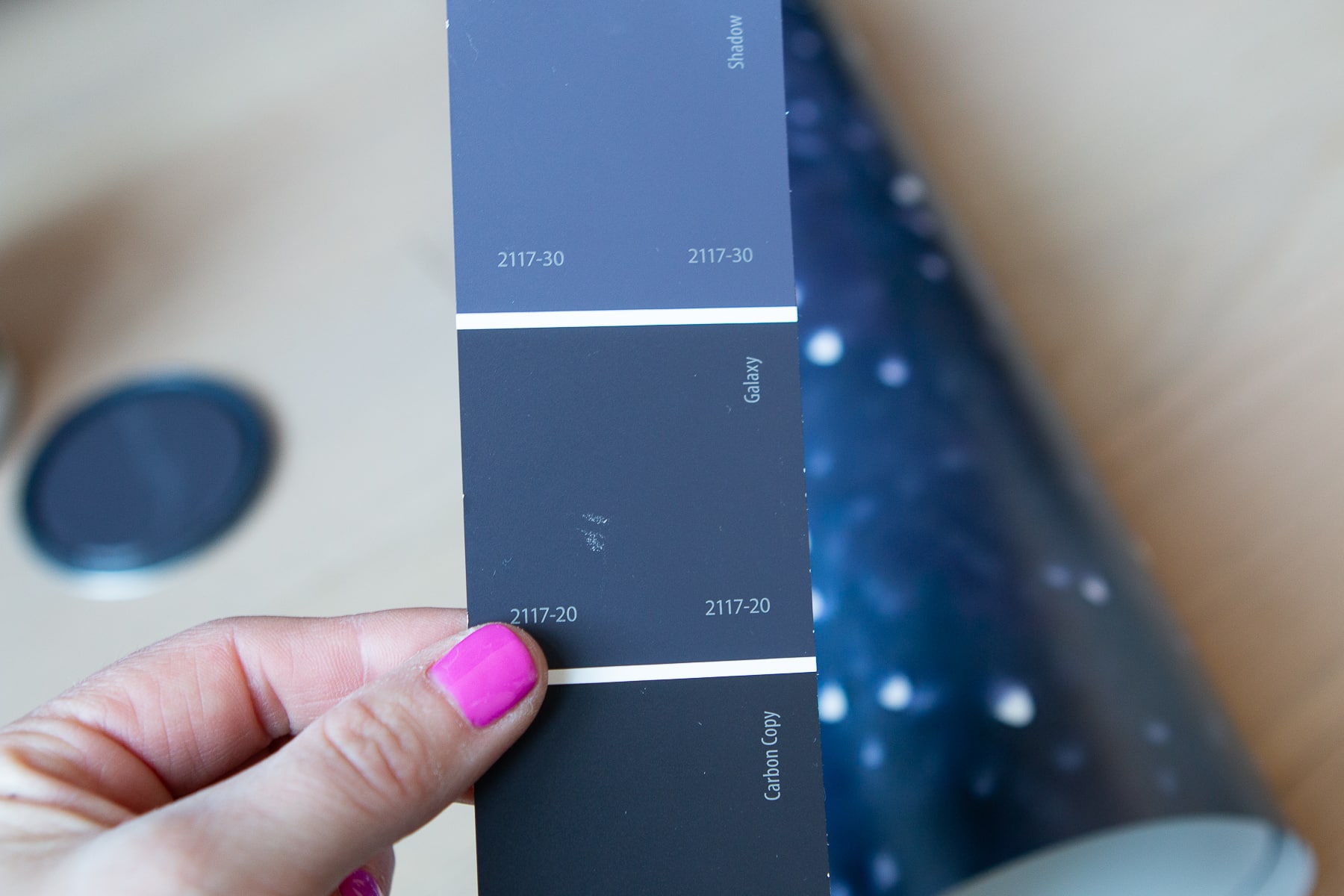
Once you pull out a paint swatch, you’ll often see several colors within the same color family, ranging from lighter to darker. This can be really helpful if you like a particular color but want to see a few variations of it.
You’ll also notice that each color has a name and identifying number or code. You don’t necessarily need to understand what those numbers mean, but definitely keep track of them so you know exactly which color you’re considering.
And remember: A small paper swatch is a great starting point, but I would never choose a paint color based on that alone. Color can look completely different once you bring it into your home, which is why I always test my top contenders in the actual room before buying gallons of paint.
Where To Buy Paint
Most hardware and paint stores carry specific paint brands, along with each brand’s color library. So, where you shop may depend on the brand or color you have your eye on.
Within each brand, you’ll usually find several different lines of paint at various price points. If you’re unsure which one is right for your project, talk to the paint expert at the store and let them know what you’re painting, where it is in your home, and how much wear and tear the space gets.
In general, higher-quality paint tends to offer better coverage and durability, which can mean fewer coats and better results over time.
My advice is to buy the best quality paint that comfortably fits your budget.
How Much Paint to Buy
A good rule of thumb is that one gallon of paint covers about 350–400 square feet with one coat. Since I always recommend two coats for the best, most even finish, you’ll want to factor that in when figuring out how much paint to buy.
Instead of guessing based on the size of the room, calculate the square footage of the walls you’ll actually be painting. Benjamin Moore also has a really helpful paint calculator that can do the math for you. And when in doubt, the paint expert at your local store can help you figure out how many gallons you’ll need.
It’s always a pain to run back to the store for more paint in the middle of a project, but you also don’t want gallons left over. Try to buy the right amount for your project, and always hang onto a little leftover paint for future touch-ups.
Picking Your Paint Color
I know it’s tempting, but you can’t pick a paint color based solely on the name. I learned this the hard way after choosing “Irish Cream” for a guest room. It was a gorgeous color (and sounded delicious!), but it just didn’t work with the cherry undertones in the hardwood floors we had at the time.
When I’m narrowing down paint colors, I usually start with one of these three approaches:
Find inspiration from something that will be in the room. It could be a piece of art, a rug, wallpaper, or even a favorite fabric. Pull a few colors from that item to give yourself a starting point. When I chose a color for our main bathroom, I looked to the wallpaper in our bedroom for inspiration and even framed a leftover piece to help tie the spaces together.
Make a Pinterest board. Start pinning rooms you love without overthinking it. Once you have at least ten, look back through them and see what patterns emerge. Are you consistently drawn to warm neutrals? Moody blues? Soft greens? This can help you narrow down the overall direction.
Think about how you want the room to feel. Maybe you want a calm, spa-like bathroom or a dark and cozy bedroom. Paint color has a huge impact on a room’s mood, so figuring out the feeling you’re after can make choosing a color much easier.
How to Test Paint Colors Before You Buy
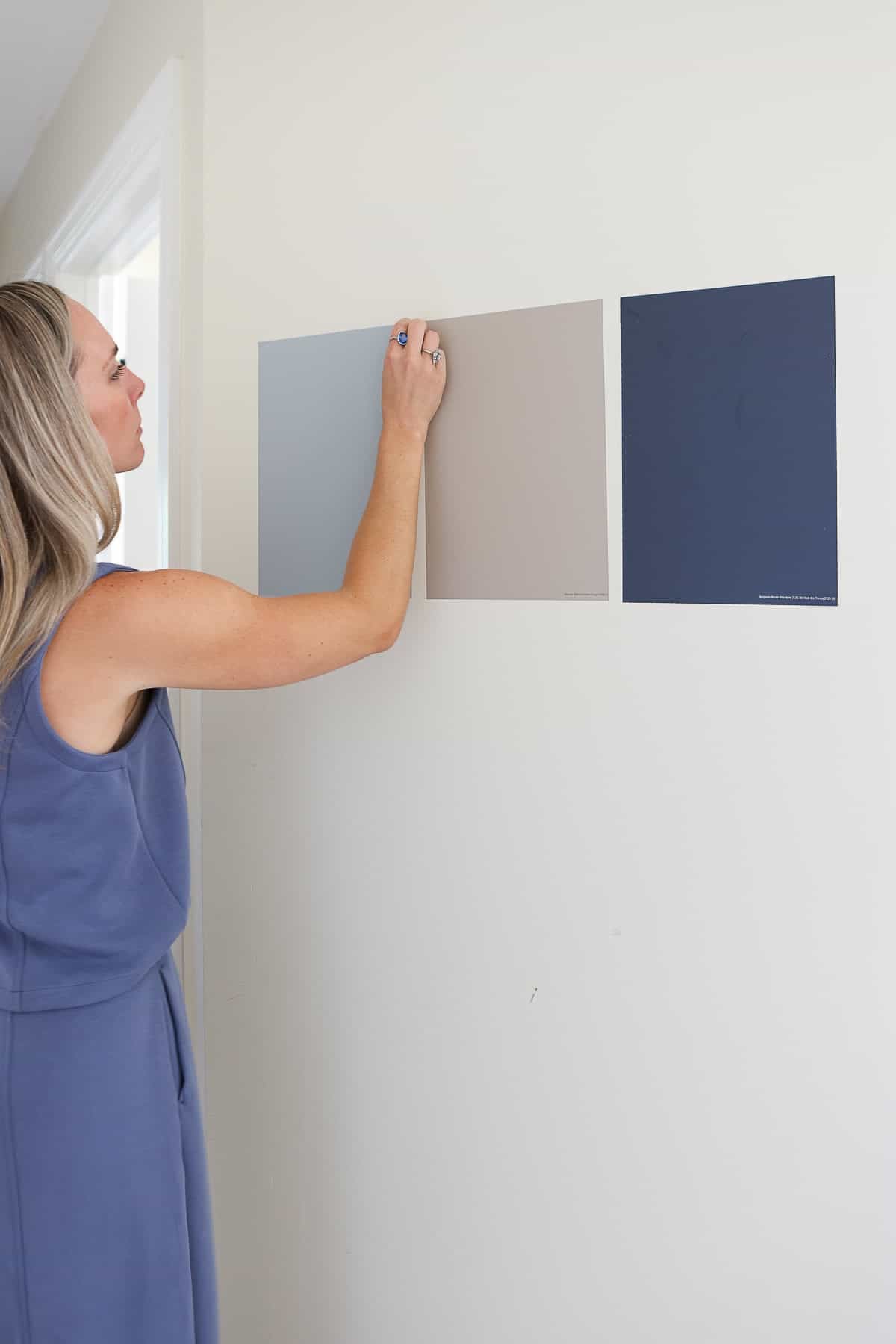
Okay, so you’ve narrowed it down to a few paint colors. Now, please don’t just pick your favorite from the tiny swatch and buy two gallons! Paint colors can look so different once you get them into your actual space. The light, flooring, furniture, and other colors in the room can all change the way a color looks.
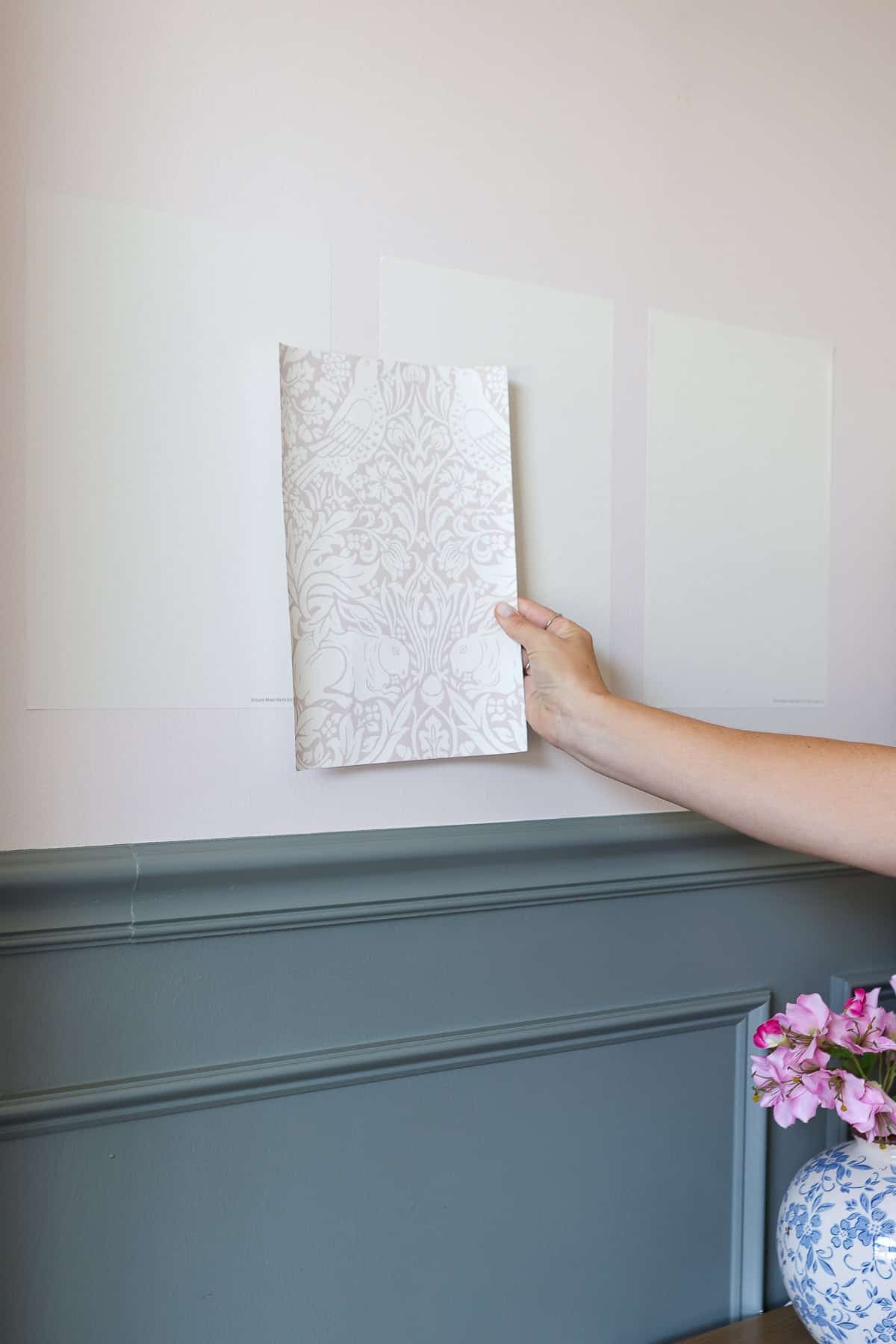
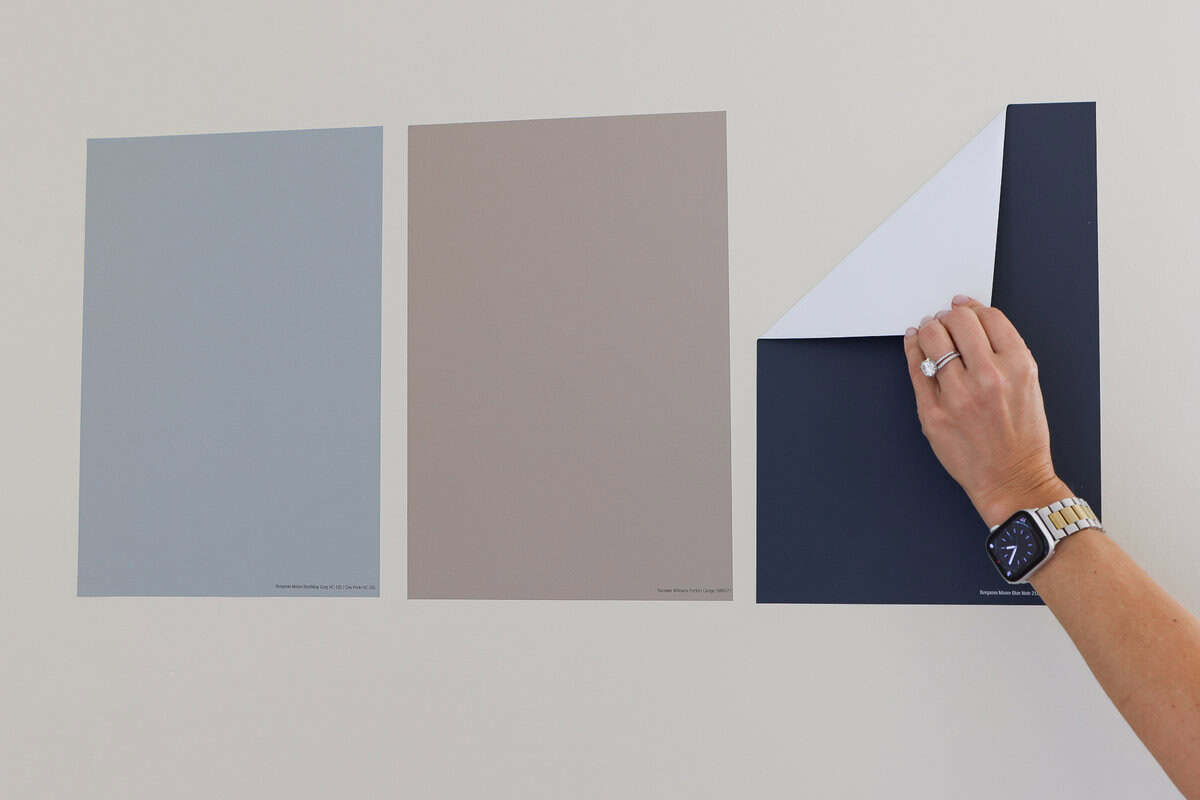
Right now, I’m trying to choose a paint color for my daughter’s bedroom ceiling to go with her new wallpaper, so I ordered a handful of Samplize peel-and-stick color samples to test out.
They’re large samples made with two coats of real paint, and I love that I can order colors from Benjamin Moore, Sherwin-Williams, and Farrow & Ball all in one place (and mine arrived overnight!).
Instead of buying a bunch of little paint pots and painting swatches all over the ceiling, I can peel, stick, and move these around the room to see how each color works with the wallpaper and her existing wall color. It’s such an easy way to see the actual color in the room before committing to a gallon of paint.
And whatever you do, don’t look at your samples once and call it a day. I like to check them in the morning, afternoon, and at night because a color I love in bright natural light might look totally different once the lamps are on. Move them around the room, too! A color can even look different from one wall to another depending on how the light hits it.
Give yourself a few days to live with the options before making the final call. I’ve definitely changed my mind after seeing a paint color in my own space, and testing it first is a whole lot easier than repainting an entire room!
What Type of Paint Is Best for Interior Walls?
Once you have your color picked out, you still have to decide which actual paint to buy. There are so many different types of paint on the shelves, but for most interior walls, I stick with a high-quality, water-based latex paint. You may also see paint labeled as acrylic or acrylic latex. These paints are easy to work with, dry relatively quickly, and cleanup is as simple as soap and water.
Oil-based paint used to be much more common for interior painting, especially on trim, doors, and other surfaces where you wanted a super smooth, durable finish. These days, I rarely use it. Water-based formulas have come so far, and they’re my go-to for the vast majority of my interior paint projects.
What Paint Finish Should You Choose?
Once you’ve chosen your paint, you’ll need to choose the finish. For most of the walls in my home, eggshell finish is my go-to. It has just a hint of sheen and holds up well to everyday life without looking overly shiny.
Flat or matte finishes have very little sheen and are popular choices for ceilings and some walls. Satin offers a bit more sheen and durability, while a semi-gloss paint is often a good choice for trim, doors, and other architectural details that get a lot of use.
The right finish really comes down to the type of surface you’re painting and how the space is used. I have an entire guide to paint sheens that breaks down flat, matte, eggshell, satin, and semi-gloss in much more detail if you need help choosing the best one for your project.
My Favorite Paint Colors
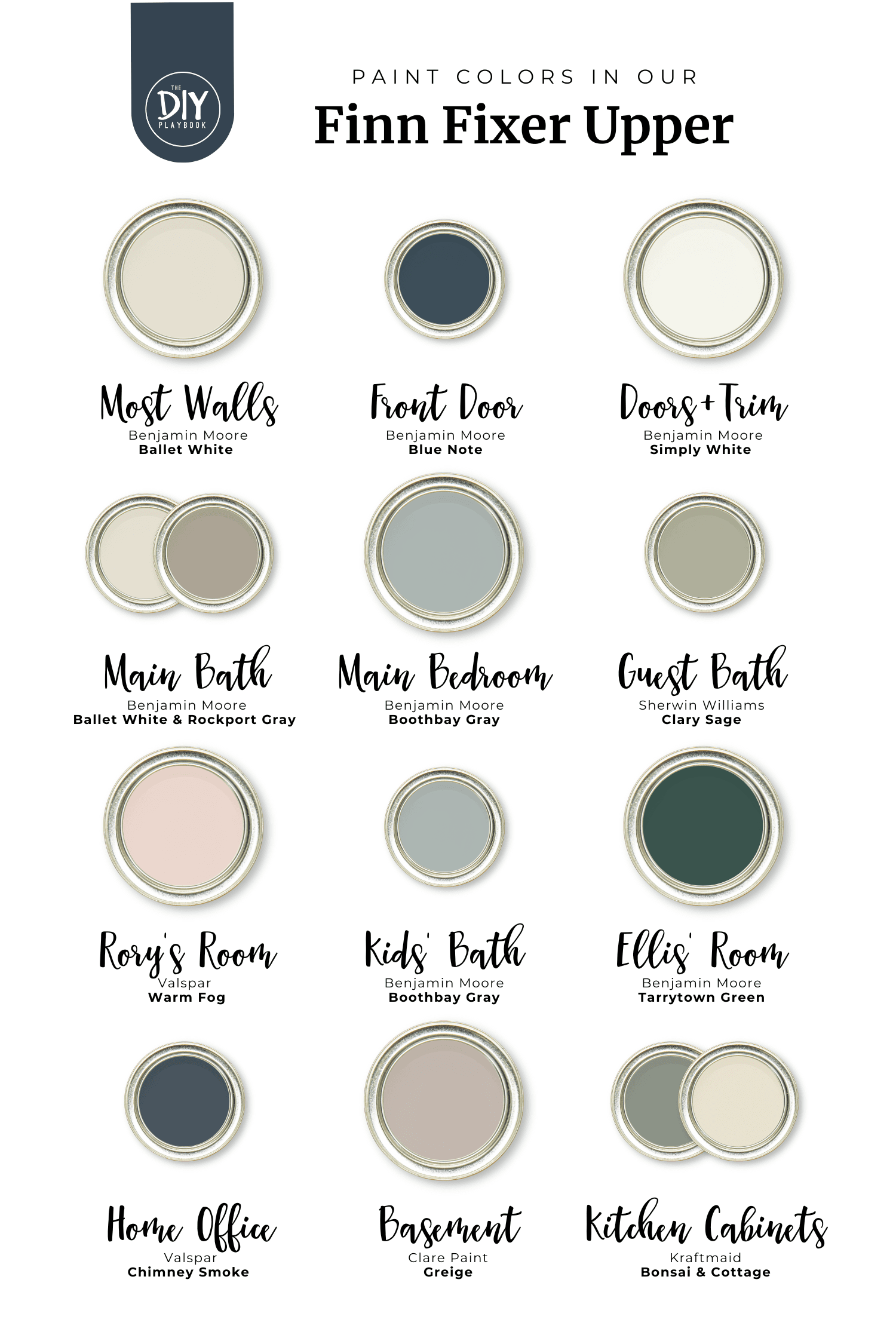
I’ve tested a LOT of paint colors over the years! If you’re looking for some inspiration, these roundups share the colors I considered, how they looked in my home, and which ones ultimately made the cut.
I hope this paint buying guide helps you feel a little more confident the next time you walk into the paint store! There are a lot of decisions to make, but don’t be afraid to ask questions along the way. That’s how I’ve learned over the years, too!
Have a favorite interior paint color you absolutely love? Let me know in the comments so we can all add it to our lists!