How to Decorate an Awkward Corner: 3 Real-Life Solutions
Awkward corners can be some of the trickiest spaces to decorate. I’m helping three readers turn overlooked corners and nooks into functional, intentional parts of their homes.
If you’ve ever looked at an awkward corner or random nook in your home and thought, “What were the builders thinking?”, I feel you! So many of these awkward spaces feel like someone noticed a little extra square footage and said, “Sure, let’s add a niche here,” without really considering how anyone would actually live with or decorate it.
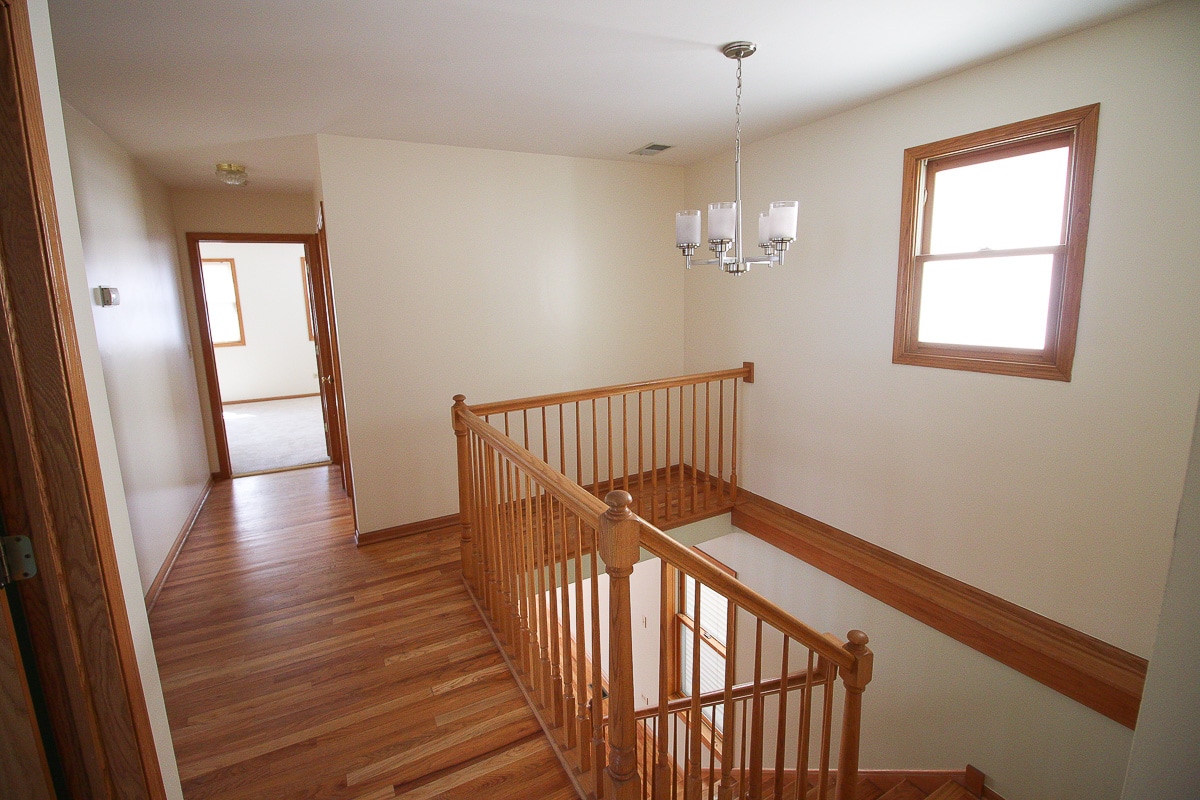
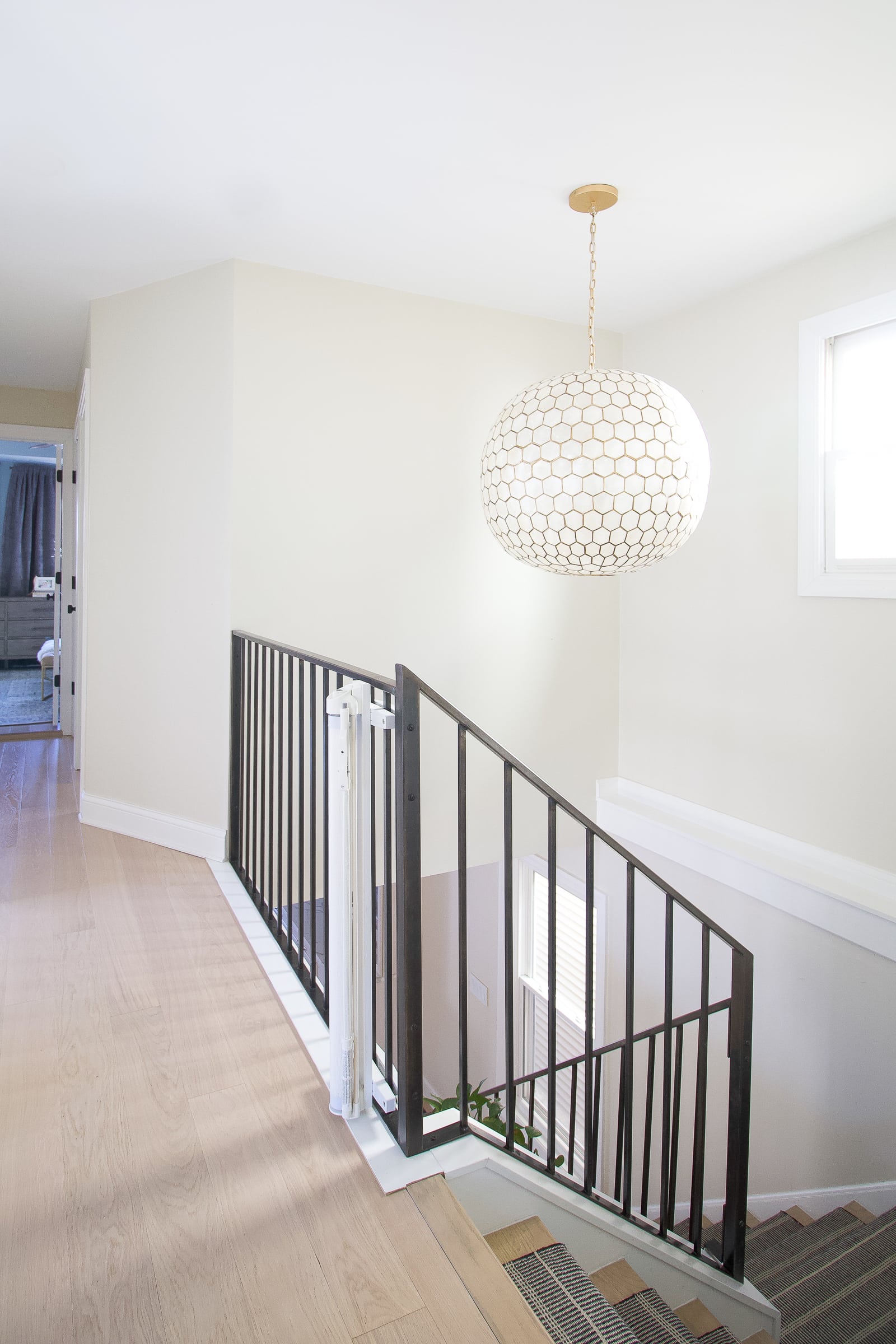
Instead of having an awkward landing at the top of our stairs, we decided to extend our laundry room out a few feet to gain extra storage space.
Builders aren’t designing for everyday life or furniture placement, and that’s okay. The good news is that with a little creativity and intention, even the most awkward corner can become functional, balanced, and feel like it was meant to be there all along. Today, I’m helping three readers solve tricky corner dilemmas with simple, realistic fixes that work in real homes.
Julia’s Design Dilemma – What To Do With a Corner Full of Cords

“What to do with this corner?! There is a corner in the living room with cords and electronics. Unfortunately, these items have to stay where they are. Do I get an additional cabinet for the corner? Do I get a different/longer TV cabinet that can accommodate it? Help!”
When I look at this space, I don’t actually see a decorating problem — I see a function and scale problem. The cords immediately draw your eye, and the TV console stops right where the corner begins, which makes the whole setup feel cut off and unfinished. Even though this isn’t an empty corner, it reads as awkward because nothing is working together as one cohesive zone.
The Fix: Hide the Cords and Fix the Scale
If Julia is open to it, my first recommendation would be to add an outlet behind the TV. Hiring an electrician to do this typically costs a few hundred dollars, and it’s absolutely worth it if it means everything can plug in behind the TV instead of along the side wall. Once the cords disappear, this corner becomes dramatically calmer.
If adding an outlet truly isn’t an option, then the solution comes down to better scale. Right now, the TV is roughly the same width as the console, which is something I try to avoid. Ideally, the TV should take up about two-thirds of the width of the console, with extra length on either side to visually ground the wall.

That means Julia needs a longer TV console anyway — and once she has one, those electronics on the floor can be tucked right next to it and fully hidden. I’d stick with something that complements her existing style, because she’s already doing a lot right. The rattan console is really pretty, and I love the plant stand, so I’d look for a warm, natural piece that feels like an extension of what she already has.
With a longer console in place, the corner no longer feels like a problem to solve. The cords are contained, the proportions make sense, and the entire TV wall feels finished instead of abruptly ending.
Many design dilemmas come down to the wrong scale. This blog post goes into everything you need to know about mastering scale and proportion.
Kelly’s Design Dilemma – A Deep Fireplace Nook That Feels Impossible to Decorate

“We have a raised niche next to our electric fireplace that I have no idea what to do with. Baskets? Floating shelves? Nothing seems right because the space is so large and deep. I’ve also considered tiling around the whole area.”
At first glance, this might seem like a styling issue — but once I really studied the blank space (and yes, actually grabbed a tape measure), it became clear that this nook is HUGE. With nearly 29 inches of depth, this isn’t a small decorative moment or a place for a couple of baskets. It’s real, usable square footage.

And that’s exactly why nothing Kelly has tried feels right. This open space was never meant to be “decorated.” It was added by the builder as an architectural feature without much thought to how someone would actually live with it day to day.
The Fix: Stop Decorating It and Turn It Into a Built-In
When a niche is this deep, the solution isn’t more decor — it’s function. No amount of vases, baskets, or floating shelves will ever feel right here because everything ends up looking undersized and awkward.

Instead, I would turn this entire nook into a custom built-in cabinet. Because of the depth, closed storage is key. I’d recommend two cabinet doors with shelving inside so Kelly can fully conceal electronics, cords, and anything else she doesn’t want on display, while also gaining extra storage space.
Once the niche is treated like furniture instead of a shelf, the whole wall starts to make sense.
To make the entire fireplace wall feel cohesive, I’d also center the TV over the mantel. Finally, I’d swap the white mantel for a wood mantel and add a bit of intentional decor. The warmth helps break up what’s currently a lot of white and softens the contrast between the black fireplace and the TV.
Together, these changes turn this wall from a builder’s afterthought into a functional, balanced focal point.
Ericka’s Design Dilemma – An Awkward Staircase Nook With No Obvious Purpose

“Our staircase opens up to the second floor ceiling and a window. We love how open it feels, but after two years I can’t figure out what to do with this little nook space. It’s not big enough for a chair, so it’s just become our home for Frankie the Fiddle Fig.”
This is such a common builder move — creating a dramatic, open staircase moment without thinking through what homeowners are actually supposed to do with the leftover floor space. It’s too small for furniture, too visible to ignore, and because it’s tucked next to the stairs, it can’t just be a dumping ground either.
Right now, the fiddle leaf fig is doing its best — and honestly, the tall plant is not a bad placeholder — but the space still feels unresolved. Sorry, Frankie the Fiddle Fig. The issue isn’t that Ericka hasn’t tried hard enough. It’s that this empty space needs intent, not just a large plant.
The Fix: Use Art and Light to Activate the Vertical Space
When I look at Ericka’s space, the biggest opportunity is the vertical wall to the left of the stairs. That’s where the magic needs to happen. I would absolutely do a gallery wall that climbs upward along that wall to take advantage of the height and visually connect the lower level to the second floor.

Instead of relying on a plant to fill the space, I’d ditch the fiddle leaf fig and bring in something more functional. A round table works perfectly here — just big enough to feel intentional. On top, I’d add a table lamp and a coffee table book or other decorative items. That gives the nook purpose, warmth, and light without forcing furniture where it doesn’t belong.
This approach fills the dead space in a smarter way. The gallery wall adds interest and scale, the lamp brings in ambient lighting, and the table grounds the area. Together, they make the nook feel finished — not cluttered — while still preserving the openness Ericka loves about the staircase.
The Big Takeaway
If there’s one thing all three of these spaces have in common, it’s this: awkward corners usually aren’t a decorating problem. They’re a planning problem. When something feels off, it’s often because the space was never designed with real life, furniture, or function in mind.
The fix isn’t always adding more decor. Sometimes it’s correcting scale, sometimes it’s adding storage, and sometimes it’s simply giving the space a clear purpose. Once you stop trying to “fill” an awkward corner and start treating it like a functional zone, everything clicks into place.
If you’re staring at a corner in your home that just doesn’t make sense, I hope this post gives you permission to think more practically about how to use it. If you have a design dilemma of your own, you can submit it here.