
How to Style Throw Pillows: Tips + Mistakes to Avoid
Wondering how to style throw pillows so your couch looks pulled together instead of cluttered? I’m sharing my favorite tips for choosing the right pillow sizes, mixing colors, patterns, and textures, and creating combinations that work in your living room.
I’ve always been a throw pillow person. When I first got into home design, swapping out pillows was one of my favorite ways to experiment with my style and change the look of a room without spending a ton of money.

And while throw pillows obviously aren’t essential to a well-functioning home, they can make a surprisingly big difference in how a room looks and feels. The right combination can add color, pattern, texture, and personality to a living room, and even make a couch you don’t totally love look a whole lot better.
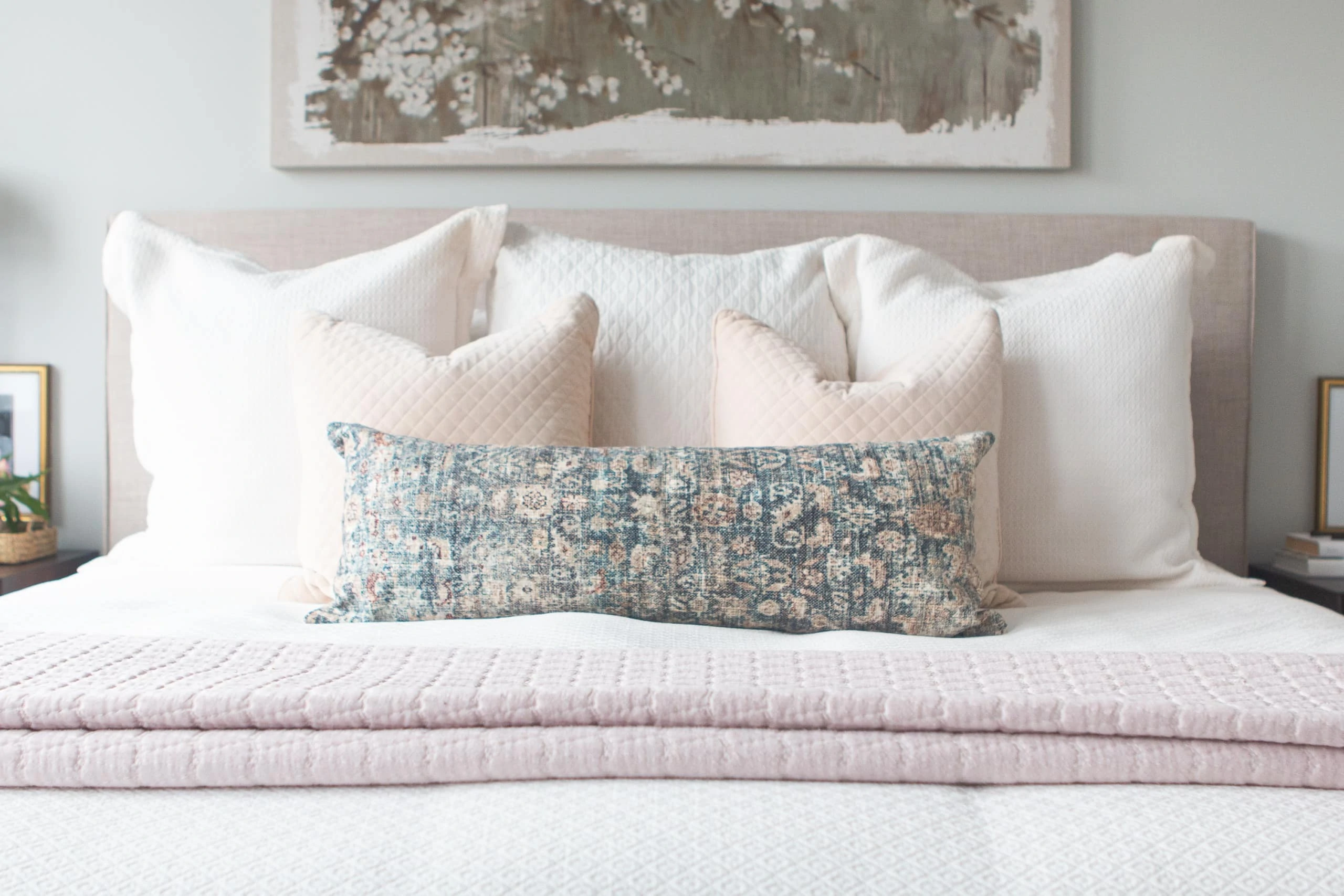
But I’ve also learned that there’s a bit of an art to styling them. The size of your pillows matters. So does the number of pillows you use, how you mix patterns and textures, and even the pillow inserts inside the covers.
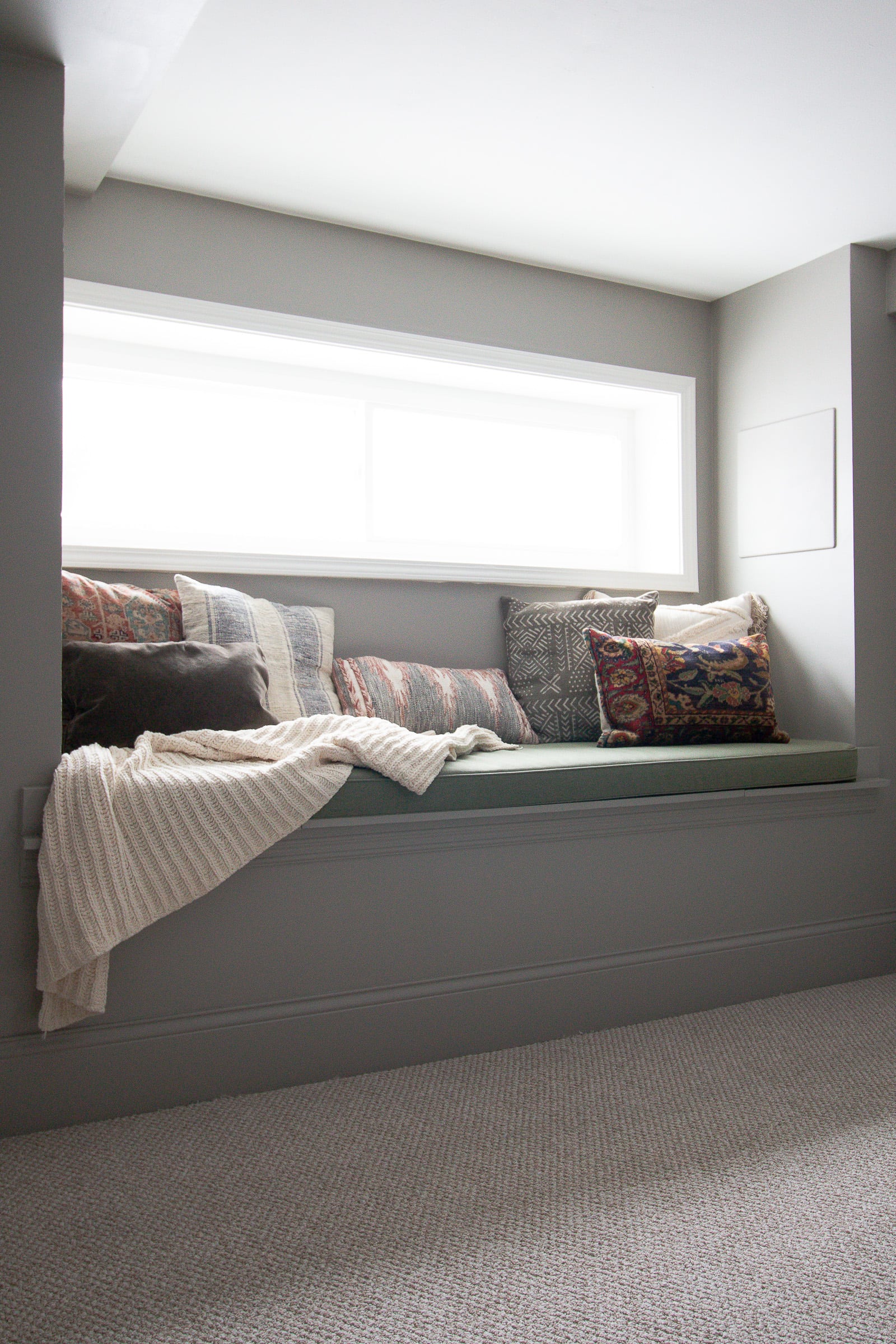
This post is part of my Design Mistakes series, where I share some of the mistakes I’ve made in my own home and the simple lessons I’ve learned along the way. So let’s get into my best tips for styling throw pillows, along with a few of the most common mistakes I see.
Start With the Right Throw Pillow Sizes
One of the biggest throw pillow mistakes I see is using pillows that are too small for the furniture. A bunch of smaller pillows can make a large sofa feel cluttered instead of cozy and pulled together.

As a good rule of thumb, I rarely go smaller than a 20×20-inch square pillow on a sofa. I usually prefer to start with larger pillows, around 22×22 or even 24×24 inches, and then layer in a smaller square pillow or lumbar pillow in front.
The size of your sofa matters, too. A large sofa or sectional can handle oversized pillows, while a smaller couch or accent chair may call for something more petite. The goal is to choose pillows that feel proportional to the furniture instead of getting lost on it.
I also like to use different sizes and shapes rather than lining up several identical square pillows. For example, you might place your largest pillows in the back, layer slightly smaller pillows in front, and finish with a lumbar pillow. That variation creates more visual interest and gives the arrangement a collected, comfortable look.
If your current throw pillow arrangement feels a little off and you can’t figure out why, check the size first. Simply swapping a few small pillows for larger ones can completely change the overall look of your couch.
Skip the Matching Couch Pillows

One of my first design mistakes as a new homeowner was using only the throw pillows that came with my couch. My first “big girl” couch purchase was this white sofa from JCPenney back in 2011, and it came with three perfectly matching pillows. I put them on the couch, stepped back, and thought I was good to go.

But once I started experimenting with different couch pillows, I realized how much more personality they could bring to the room. Swapping those matching pillows for a combination of different colors, patterns, and textures made the entire space feel more collected and less like it came straight from a furniture showroom.
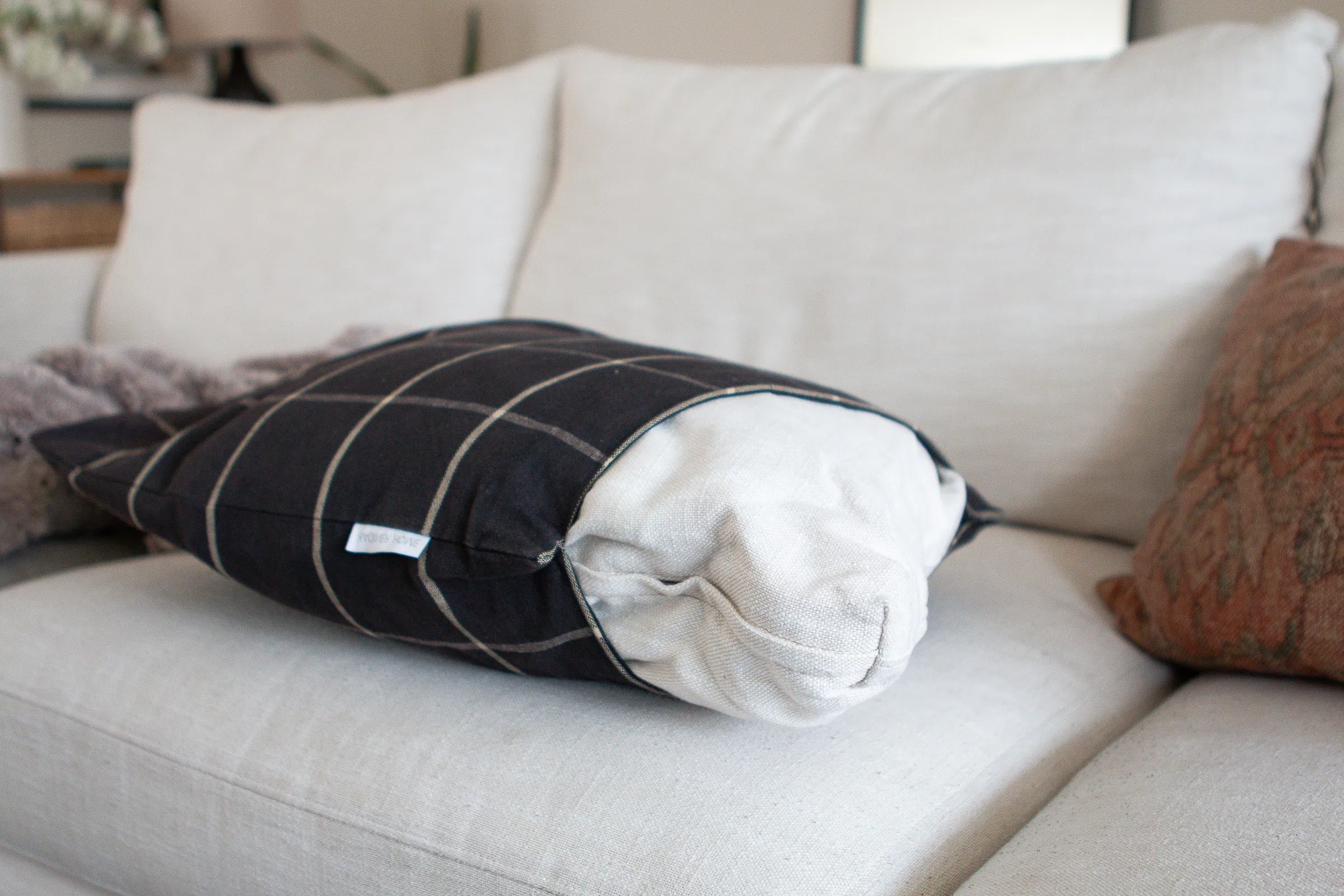
That doesn’t mean you should toss the matching pillows that came with your sofa! If they have good-quality pillow inserts, save them. I’ve reused the inserts from our couches all over our home by simply adding a new pillow cover. You can also move a matching pillow to an accent chair or another room where it won’t blend right into the upholstery.
Think of the pillows that come with your sofa as a starting point, not a complete pillow combination. A few simple swaps are a great opportunity to bring your own style into the room.
Get the Pillow Insert Size Right

The size of the pillow itself matters, but so does the size of the insert inside the cover. A pillow cover paired with an insert of the exact same size can sometimes look flat or saggy. In the example above, I had a 20×20-inch pillow cover with a 20×20-inch insert, and you can see that it didn’t completely fill out the corners.
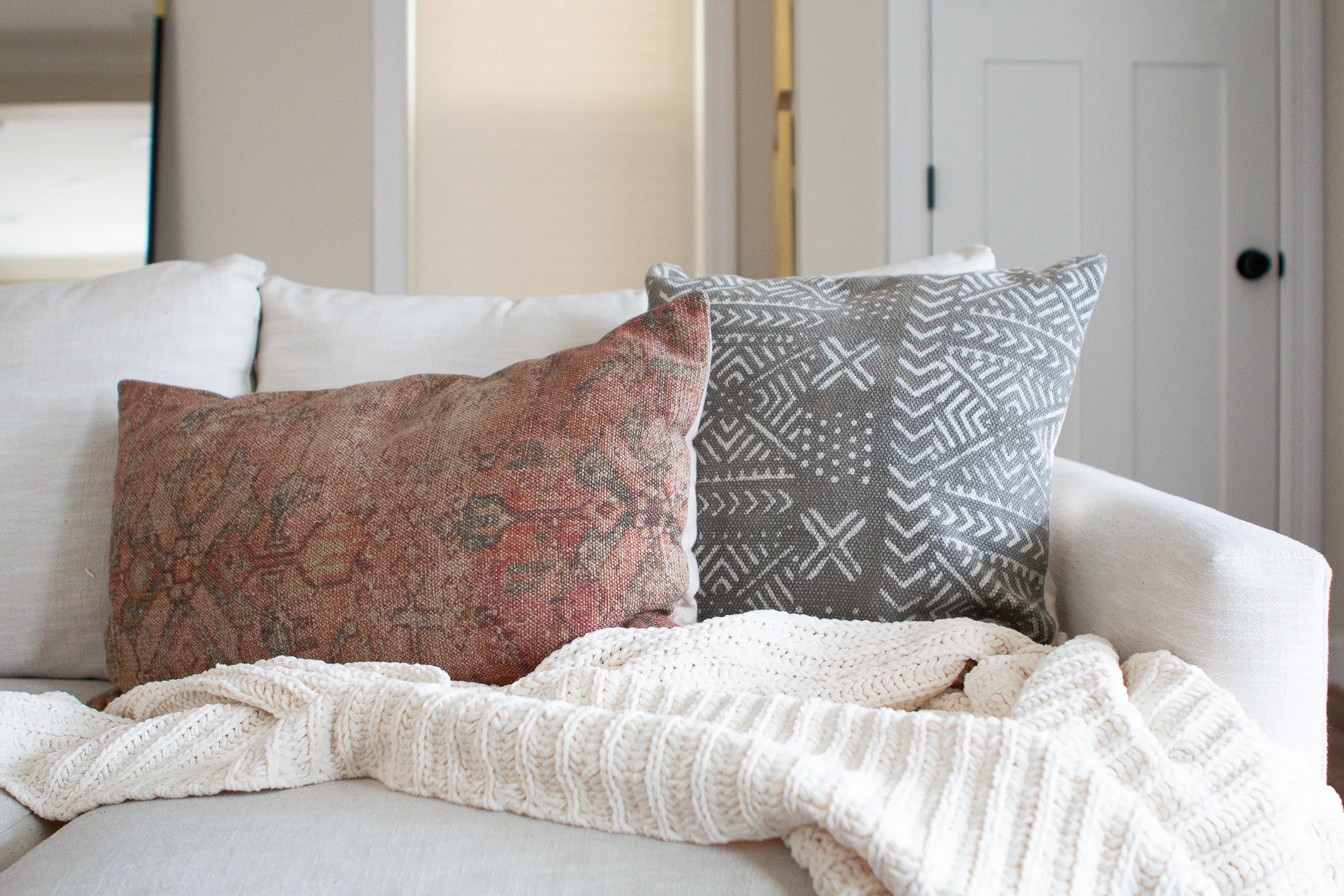
I swapped it for a 22×22-inch insert, and the pillow immediately looked fuller and more substantial. As a general rule, I like to size up about two inches for most square pillow covers. For larger pillows, structured fabrics, or lumbar pillows, you may not need to size up as much.
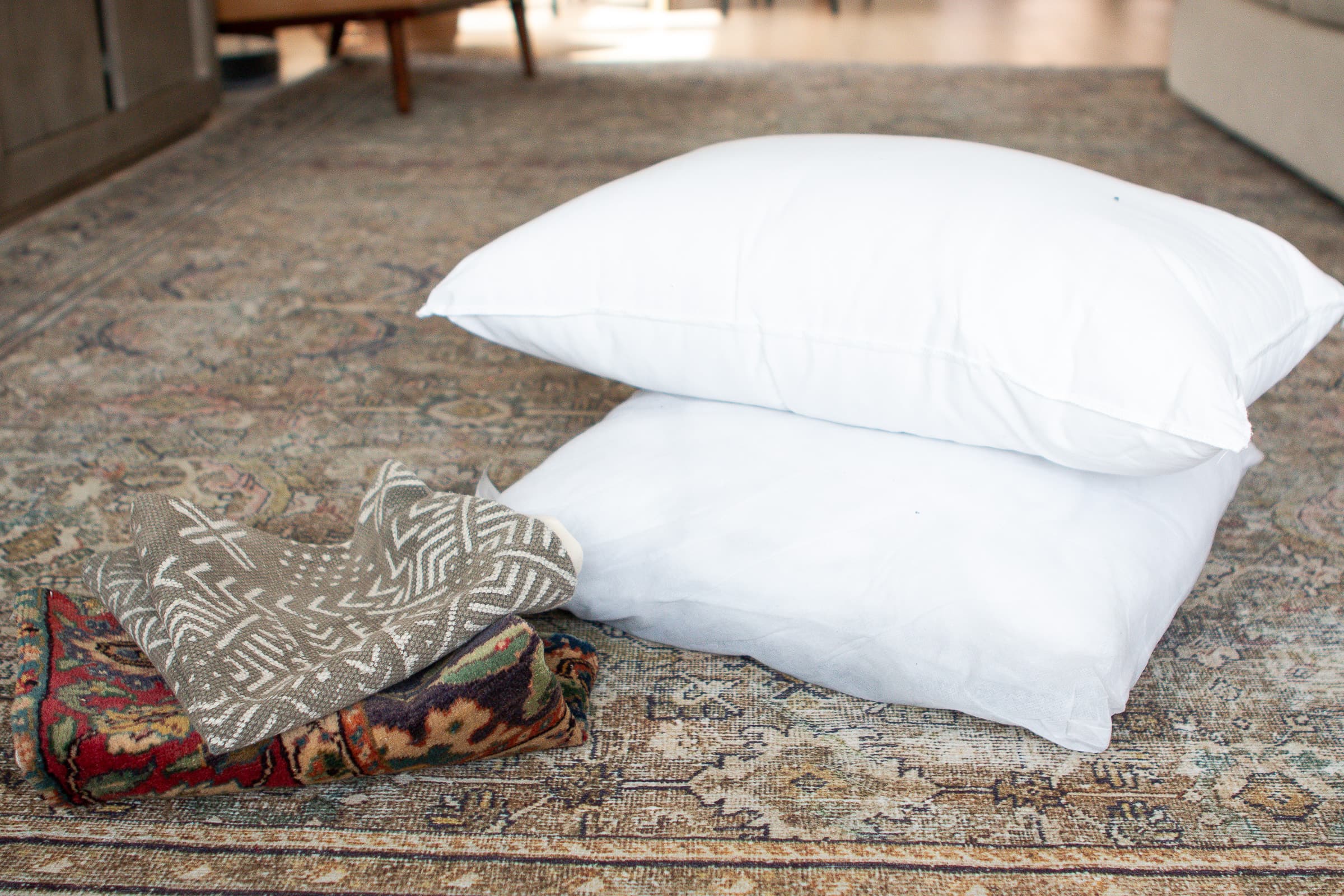
I also think it’s worth investing in a few high-quality inserts since you can reuse them with different pillow covers for years. I typically choose either down, which is soft and easy to fluff, or a down alternative if you’d rather skip the feathers. These down inserts are a favorite, and this polyester-fill option is my go-to down alternative.
If your throw pillows always seem flat, check the insert size before replacing the whole pillow. A slightly larger insert might be all you need.
Look for Removable Pillow Covers
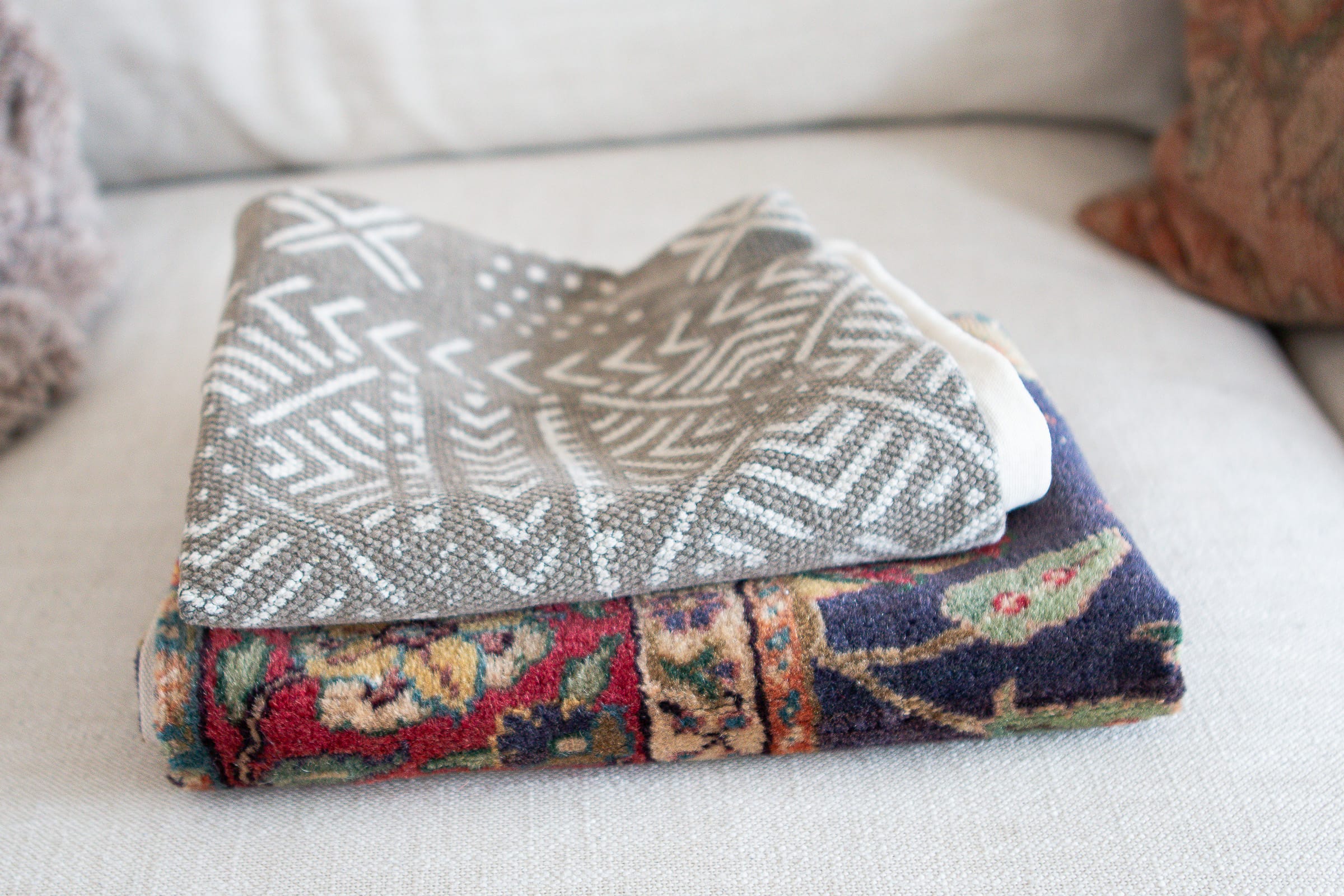
Whenever possible, I buy pillow covers with a zipper or button closure. They’re easier to clean, and if you like to swap your pillows seasonally, you can simply fold up the covers and reuse the same inserts instead of storing a bunch of bulky pillows.
Choose a Cohesive Color Palette
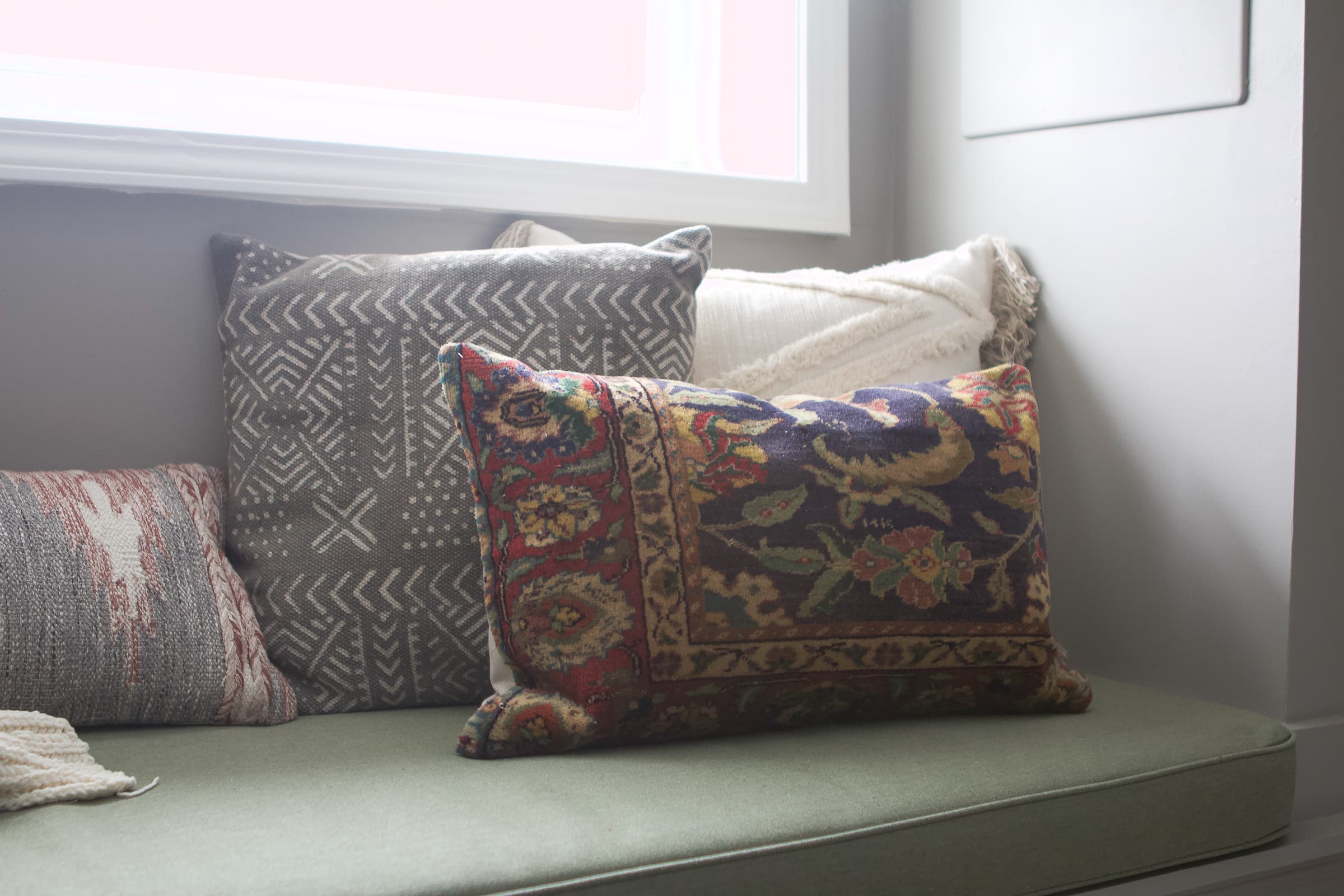
Now for the fun part: figuring out which throw pillows actually look good together! I like to start with the color scheme of the room as a whole. Look at your rug, artwork, curtains, and other decor, and pull a few colors from those pieces to use throughout your pillows.
That doesn’t mean every pillow needs to match or include every color in the room. In fact, I think the overall look is more interesting when you mix a few different shades and bring in plenty of neutrals. You might choose a solid pillow in one of your accent colors, a patterned pillow that incorporates another, and a neutral pillow to balance everything out.
Throw pillows are also a great place to experiment with color. If most of your living room is neutral, adding a pop of color with a pillow is a much easier commitment than buying a bright sofa or painting the entire space. Before you shop, choose two or three colors from the room that you want to repeat, then use those as your guide.
Mix Patterns and Textures

Color is only part of the equation. I also like to mix different patterns and textures to keep a pillow combination from feeling flat or overly coordinated.

If you’re using more than one pattern, vary the scale. A large floral or geometric pattern can work well with a smaller stripe or plaid, especially when they share a few of the same colors. Then mix in solid pillows and different fabrics, like linen, velvet, or a chunky woven texture, to give the arrangement some breathing room.
A simple formula to remember is solid + pattern + texture. You don’t need every pillow to make a statement. Usually, the mix looks better when one or two pillows stand out and the others play a supporting role.
How Many Throw Pillows Should You Use?

There’s no magic number of throw pillows that works for every couch. It really depends on the size of your sofa and how you use it. You want enough pillows to make the seating area feel cozy, but not so many that you have to move a pile of them every time you sit down.
For a standard sofa, I usually like three to five pillows. On a large sofa or sectional, you can use more, grouping a few pillows on each side or around the corner of the sectional. And sometimes fewer pillows look best. A single lumbar pillow can be all an accent chair needs.
I also tend to prefer an odd number of pillows and a slightly asymmetrical arrangement. It feels a little more relaxed and collected, which is usually the look I’m going for.
My Easy Throw Pillow Styling Formula
If you’re standing in front of your couch wondering how to put all of this together, here’s a simple formula I use again and again:
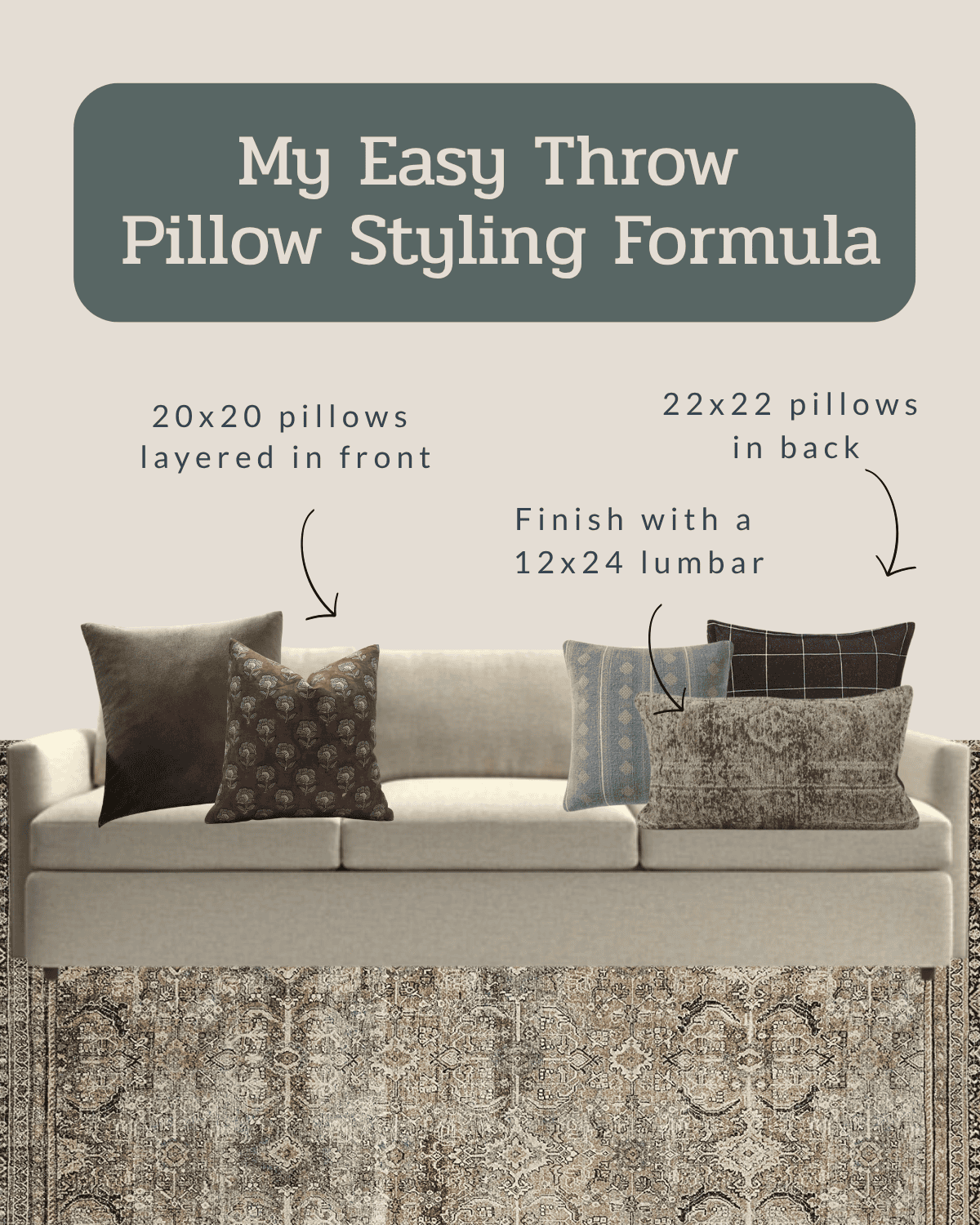
Start with your largest pillows in the back, add a slightly smaller pillow in front, and finish with a lumbar pillow. From there, make sure you have a mix of solids, patterns, and textures within your color palette.
On a standard sofa, that might mean two 22×22-inch pillows, two 20×20-inch pillows, and one lumbar. But don’t feel like both sides need to match perfectly. I usually prefer a slightly more relaxed, asymmetrical look.
Most importantly, use this as a starting point, not a strict rule. Move things around, try pillows you already own in different combinations, and step back to see how the entire room feels. Sometimes simply moving a pillow from one side of the sofa to the other is all it takes to get the balance right.
My Favorite Throw Pillows For Your Couch
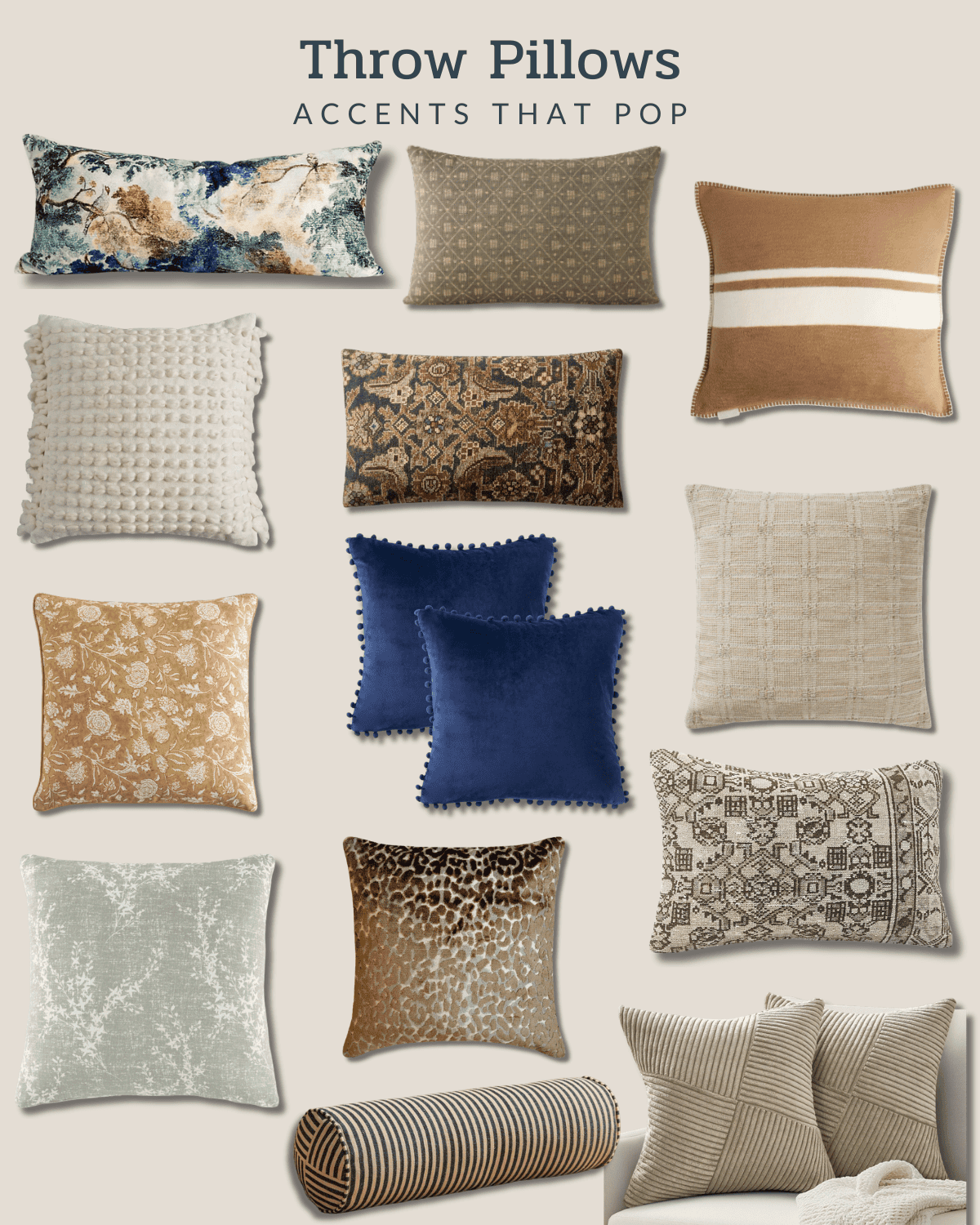
Now that you know what to look for, here are some of my favorite throw pillows and pillow covers right now. I included a mix of sizes, colors, patterns, and textures so you can create your own combination using the tips above.
At the end of the day, styling throw pillows is about finding a combination that feels good in your space. Use these tips as a starting point, then play around with what you already own until your couch feels cozy, collected, and like you.
More Pillow Styling Ideas
- The Right Way to Use Throw Blankets
- One Couch, 3 Styles of Pillows
- How to Arrange Pillows on a King Bed: 4 Easy Ways
- Choosing the Right Pillows for a Gray Couch
- How to Clean Couch Cushions
Casey


