
How to Fix Common Toilet Problems (Easy DIY Guide)
Toilets are one of those things you don’t think about… until they start running nonstop, flushing weakly, or leaking at the worst possible time. In this post, I’m breaking down the most common toilet problems, how to figure out what’s really going on inside the tank, and the simple fixes you can tackle yourself before calling a plumber.
Our first-floor toilet has always been a bit of a troublemaker. Over the years, I’ve replaced the toilet flapper, tightened a loose flush handle, adjusted the toilet float arm — and still it would randomly start running constantly or flush weakly at the worst possible time.

A few weeks ago, after the bowl filled painfully slowly again, I finally opened the toilet tank and realized several parts were worn out, and the water flow just wasn’t working the way it should. Then and there, I decided to replace every single part.
The good news is that common toilet issues — a leaky toilet, slow tank refills, minor clogs, or water leaking at the base of the toilet — are actually simple fixes. With a few basic tools and a little understanding of how a toilet works, you can handle many toilet repairs on your own.
Toilet problems are annoying, but they’re also one of the few plumbing issues that homeowners can usually fix without calling a pro. And many of the repairs cost $10–$20 and take under 10 minutes!
How a Toilet Works
Before we dive into toilet repairs, it helps to understand what’s actually happening inside the toilet tank. Take off the tank lid, give the toilet a flush, and watch the parts move. This is the best way to see how your toilet works.

Here’s the quick breakdown:
- When you press the flush handle, it lifts a small chain inside the tank.
- That chain raises the toilet flapper, which opens the flush valve and lets the tank water rush into the toilet bowl.
- The force of that water pushes everything through the trap and into the drain line.
- As the tank empties, the flapper closes and the fill valve turns on.
- A float (either a float arm or a cup-style float) rises with the tank water level and shuts off the water when the tank refills.
Every common problem — from a constantly running toilet to a weak flush — usually comes back to one of these few parts. Once you know who’s who in the tank, the fixes become a whole lot easier.
Before You Start: A Few Quick Safety Checks

A lot of toilet fixes are very beginner-friendly, but there are a few basics you’ll want to cover before you start:
- Turn the water off. Look for the small shutoff valve on the wall or floor behind your toilet and turn it clockwise until it stops. Flush once to empty most of the water from the tank.
- Handle the tank lid carefully. It’s heavy and easy to chip, so set it somewhere flat and out of the way while you work.
- Go easy on the hardware. Most of the nuts and bolts in and around your toilet are either metal sitting on porcelain or plastic. Snug is good; cranking down as hard as you can can crack something.
- Match your parts. Flappers come in different sizes (usually 2-inch or 3-inch), and some toilets use brand-specific parts. When in doubt, snap a photo of the inside of your tank or bring the old part with you to the store.
And one more big one that I totally learned the hard way…
One-Piece vs. Two-Piece Toilets (This Really Matters)

Not all toilets are built the same.
- A two-piece toilet has a separate tank and bowl that are bolted together.
- A one-piece toilet has the tank and bowl molded as a single unit. There’s no seam between them.

Why does this matter? Because many “universal” repair kits are designed for two-piece toilets only. I bought one of those kits, cheerfully took everything apart… and then realized the flush valve in the kit didn’t actually work with my older one-piece toilet.
Before you order parts, take a quick look at the side of your toilet. If you can clearly see a separate tank sitting on top of the bowl with a seam between them, you’ve got a two-piece. If it’s all one smooth shape, you’ve probably got a one-piece, and you’ll want to double-check that any kit you buy specifically says it works with one-piece toilets.
Common Toilet Problems (and Exactly How to Fix Them)
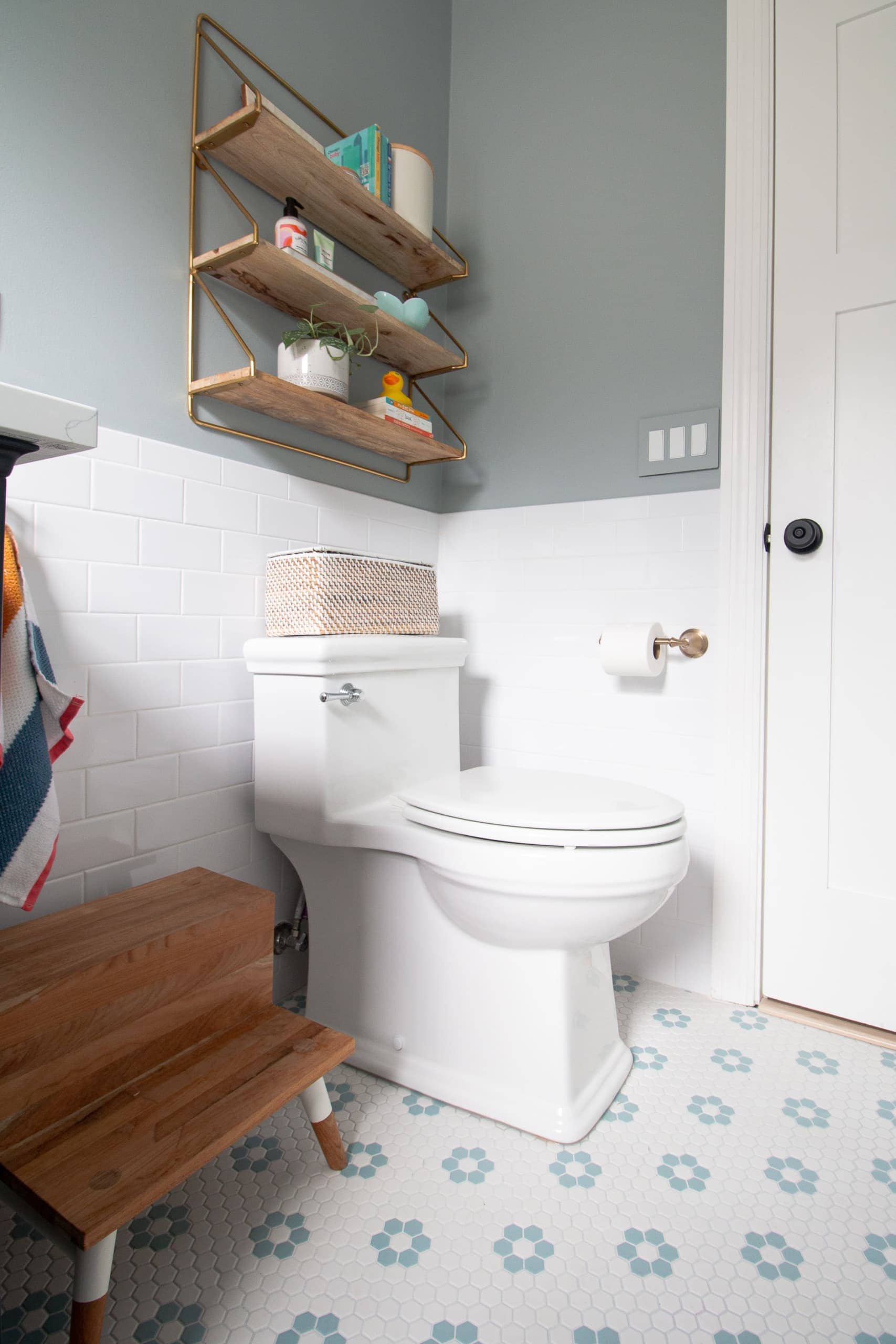
Below are the most common toilet issues homeowners run into and the simple fixes that actually work. Each one is beginner-friendly and uses basic tools you probably already have.
1. The Toilet Keeps Running

A constantly running toilet is the ultimate water waster. If you hear a steady hiss, see the tank refilling on its own, or notice your water bill creeping up, something inside the toilet’s tank isn’t sealing or shutting off properly. Here are the likely causes:
- Worn-out or warped toilet flapper
- Old or leaking flush valve
- Chain too tight
- Faulty or stuck fill valve / float mechanism
How to Fix It
- Check the flapper
Lift the tank lid and make sure it’s sealing properly. If it’s stiff, cracked, or in rough shape, replace it. It’s an inexpensive fix. - Add a little slack to the chain
A too-tight chain holds the flapper open. Aim for about ½ inch of play. - Inspect the flush valve
If a brand-new flapper still leaks, the flush valve may be worn or warped. Older toilets especially benefit from replacing this part. Just make sure you measure the hole in the bottom of your tank. It’s usually 2 or 3 inches in diameter, and you want to buy the correct part. - Adjust or replace the fill valve
If water rises to the top of the overflow tube or doesn’t shut off, adjust the float. If that doesn’t help, replace the fill valve.
2. Weak or Incomplete Flush
A weak flush usually shows up as the bowl not emptying fully, needing multiple flushes, or the toilet flushes, but nothing really moves. This is one of the most common toilet issues, especially in older toilets. Here are the likely causes:
- Low tank water level
- Chain too loose
- Mineral deposits in the rim holes
- Refill tube not directing water into the overflow tube
- Minor clogs from too much toilet paper or small foreign objects
How to Fix It
- Raise the tank water level
Adjust the float until the tank refills to about ½–1 inch below the top of the overflow tube. - Tighten the chain slightly
Too much slack means the flapper doesn’t lift fully, which weakens the flush. - Clean the rim holes
Mineral buildup can block the tiny holes under the rim. Use a small brush or piece of wire to gently clear them. - Adjust the refill tube
Make sure it’s aimed into the overflow tube so enough water enters the bowl during the flush. - Clear minor clogs
Try a toilet plunger first and a drain snake if needed.
3. The Toilet Won’t Flush at All

If you press the handle and nothing happens, the issue is almost always inside the toilet tank, not the toilet bowl. Here are the likely causes:
- Loose or broken flush handle
- Chain detached from the lift arm
- Damaged flapper
- Clogged line or obstruction in the drain
How to Fix It
- Tighten the handle nut
It’s reverse-threaded — turn clockwise to loosen, counterclockwise to tighten. - Reconnect or adjust the chain
Make sure it’s attached securely and not tangled under the flapper. - Check the flapper
If the flapper is warped or not lifting, replace it with one that matches your flush valve size (usually 2 or 3 inches). - Rule out a clog
If the tank mechanics look fine, use a toilet plunger to clear the line.
4. The Toilet Fills Slowly
When the tank or toilet bowl fills slowly, it usually means there’s a water flow issue somewhere between the water supply valve and the fill valve inside the tank. Here are the likely causes:
- Water supply valve partially closed
- Debris or mineral deposits inside the fill valve
- Refill tube not positioned correctly
- Old fill valve starting to fail
How to Fix It
- Fully open the water supply valve
Turn it counterclockwise until it stops. - Clean the fill valve
Shut off the water, remove the top of the fill valve, and clear out debris, per the manufacturer instructions. - Check the refill tube
It should sit just above the top of the overflow tube, not stuck down inside it. - Replace the fill valve
If cleaning doesn’t help, installing a new fill valve is an inexpensive fix that restores strong water flow.
5. Toilet Leaks (Tank or Base)
A leaky toilet can leave water on your bathroom floor, stain the ceiling below, or damage the toilet’s base if not addressed quickly. Here are the likely causes:
- Loose or worn water supply line
- Worn tank-to-bowl gasket
- Loose bolts at the toilet’s base
- Cracked tank
- Failing wax ring seal
How to Fix It
- Tighten the supply line connection
Check where the water supply line meets the tank and make sure it’s snug. - Inspect the tank bolts and gasket
If water leaks between the tank and bowl, tighten the bolts or replace the gasket. - Check for cracks in the tank
Hairline cracks often require replacing the tank or sometimes the entire toilet. - Look for water at the toilet base
If you see water pooling at the toilet’s base, the wax ring seal may be failing. This repair involves lifting the toilet, so call a plumber if you’re not comfortable doing that.
6. Wobbly Toilet / Toilet Rocks When You Sit

A rocking or wobbly toilet isn’t just annoying — it can break the wax seal under the toilet and cause water damage. Here are the likely causes:
- Loose bolts at the toilet’s base
- Uneven flooring
- Broken or compressed wax seal
- Toilet not seated correctly
How to Fix It
- Gently tighten the base bolts
A little goes a long way — overtightening can crack the toilet. - Use plastic shims
If the floor isn’t level, slide shims under the base until the toilet sits securely. - Check for leaks
If the toilet rocks and you also see water leaks, the wax ring seal may need to be replaced. - Know when to call a pro
If the bathroom floor feels soft or damaged, have a plumber inspect before more issues develop.
If your toilet seat is also loose, cracked, or wobbly, you can swap it out in just a few minutes. I have a full step-by-step tutorial here: How to Change a Toilet Seat.
7. Noisy, Sticky, or Loose Flush Handle
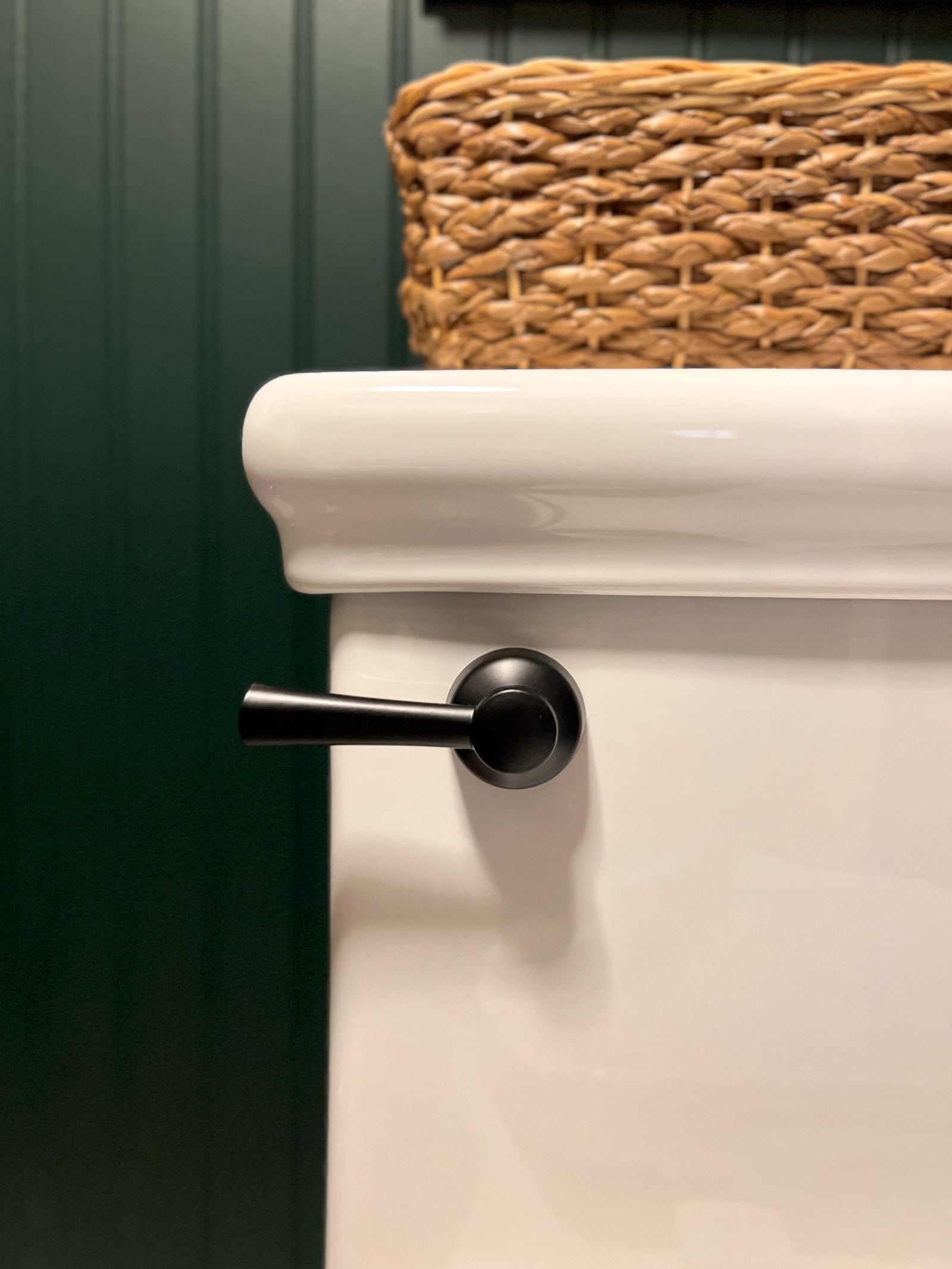
A sticky or loose handle is a common problem and often leads to a running toilet or a weak flush. Here are the likely causes:
- Loose mounting nut
- Mineral deposits around the handle
- Corroded handle arm
- Chain catching on the flapper or lift arm
How to Fix It
- Tighten or loosen the mounting nut
It’s reverse-threaded — turn clockwise to loosen, counterclockwise to tighten. - Clean around the handle
Mineral deposits can make the handle stick. A quick scrub helps it move smoothly. - Check the chain
Make sure it’s not catching or getting stuck under the flapper. - Replace the handle
If it’s cracked or corroded, a new handle is an easy, inexpensive upgrade.
Toilet Troubleshooting Cheat Sheet

Use this quick guide to match the symptom you’re seeing with the most likely cause and the simplest fix.
| Problem / Symptom | Likely Causes | Simple Fix |
|---|---|---|
| Toilet keeps running | Worn-out toilet flapper, flush valve leak, chain too tight, faulty fill valve | Replace flapper, add chain slack, replace flush valve or fill valve |
| Weak or incomplete flush | Low tank water level, chain too loose, mineral deposits in rim holes, refill tube mispositioned, minor clogs | Raise water level, tighten chain, clean rim holes, adjust refill tube, plunge or use toilet auger |
| Toilet won’t flush at all | Loose/broken flush handle, chain detached, damaged flapper, clogged line | Tighten handle nut, reconnect chain, replace flapper, use plunger or drain snake |
| Tank or bowl fills slowly | Water supply valve partially closed, debris in fill valve, refill tube issues, failing fill valve | Open water supply valve fully, clean fill valve, reposition refill tube, replace fill valve |
| Water leaking around tank | Loose supply line, worn tank bolts or gasket, cracked toilet tank | Tighten supply line, replace bolts or gasket, replace tank if cracked |
| Water leaking around base of the toilet | Loose bolts, damaged wax ring seal, misaligned toilet base | Tighten bolts gently, replace wax ring seal (or call a plumber) |
| Toilet rocks or wobbles | Loose bolts, uneven floor, wax seal failure | Tighten bolts carefully, add plastic shims, replace wax ring |
| Noisy, sticky, or loose toilet handle | Mineral buildup, loose mounting nut, corroded handle arm, chain catching | Clean handle area, tighten/loosen mounting nut, replace handle, adjust chain |
FAQ About Toilet Repairs

How do I know which replacement parts will fit my toilet?
Toilets aren’t universal — even the “universal” repair kits don’t work on every toilet. The easiest way to get the right parts is to take a photo inside your toilet tank and measure a few key things: the diameter of the flush valve opening (usually 2″ or 3″), the height of the fill valve, and whether you have a one-piece or two-piece toilet. If you’re unsure, remove the old part and bring it to the store for a perfect match.
How long do toilet parts usually last?
Most internal parts last 5–7 years. Flappers wear out fastest because they’re constantly submerged. Fill valves and flush valves last longer, but they can fail early if you have hard water.
Is it normal for older toilets to need more repairs?
Totally normal. Older toilets can have mineral buildup, worn seals, outdated tank parts, and weaker flushing performance. They can still work well — they just need more TLC.
Can a toilet leak without me seeing water on the floor?
Yes. Internal leaks send water from the tank straight into the bowl, wasting gallons without any visible puddles. If your toilet refills on its own or your water bill jumps, you likely have a hidden leak.
Why does my toilet keep clogging even when I plunge it?
Recurring clogs often mean:
- buildup inside the trapway
- too much toilet paper
- a foreign object stuck deeper in the line
- or a partial blockage in the sewer line. If plunging works only temporarily, try a toilet auger. Or it may be time to call a plumber.
How do I know when it’s time to replace my entire toilet?
Replace it if:
- the porcelain is cracked
- leaks keep coming back
- the toilet rocks and the subfloor is damaged
- internal repairs are adding up
- or it’s an older model using way more water than new toilets
If your seat is the only part that needs attention, a quick replacement can make the whole toilet feel new. Here’s how to change a toilet seat in just a few minutes.
Is it okay to use chemical drain cleaners in a toilet?
No. They can damage the porcelain, eat through rubber seals, and won’t reach clogs in the trap. A plunger or auger is the safest and most effective fix.
Final Thoughts

After years of tinkering with our first-floor toilet, we found the real troublemaker was the flush valve. Once I finally replaced that part (with the correct one-piece model!), everything started working the way it should. The toilet fills properly, the flush is strong, and it’s no longer running when it shouldn’t.
This toilet is definitely on the older side, so I’m going to keep an eye on it. If it keeps giving me attitude, it might be time to replace the entire thing. And honestly? That might just turn into another blog post for you.
For now, though, I’m glad I dug in, figured it out, and tackled it myself. And I hope this guide helps you feel confident doing the same in your home. Toilets may be some of the most used fixtures in the house, but with a little troubleshooting, most problems really do have simple fixes.


