Area Rug Buying Guide: Size, Style, & Tips for Every Room
Choosing the right rug for your home can feel overwhelming. In this guide, I break down everything you need to know about buying a rug before you hit “Add to Cart.”
I get it, buying a rug can feel like a big decision. They’re not cheap; they cover a ton of real estate in a room, and the wrong choice can throw the whole space off.

But here’s the good news: rugs are also one of the easiest ways to make a room feel cozy, layered, and stylish. Instead of stressing, let’s break it all down together. Consider this your complete area rug buying guide. By the end of this post, you’ll feel way more confident picking the right rug for every room in your home.
Choosing a Rug: What to Consider First
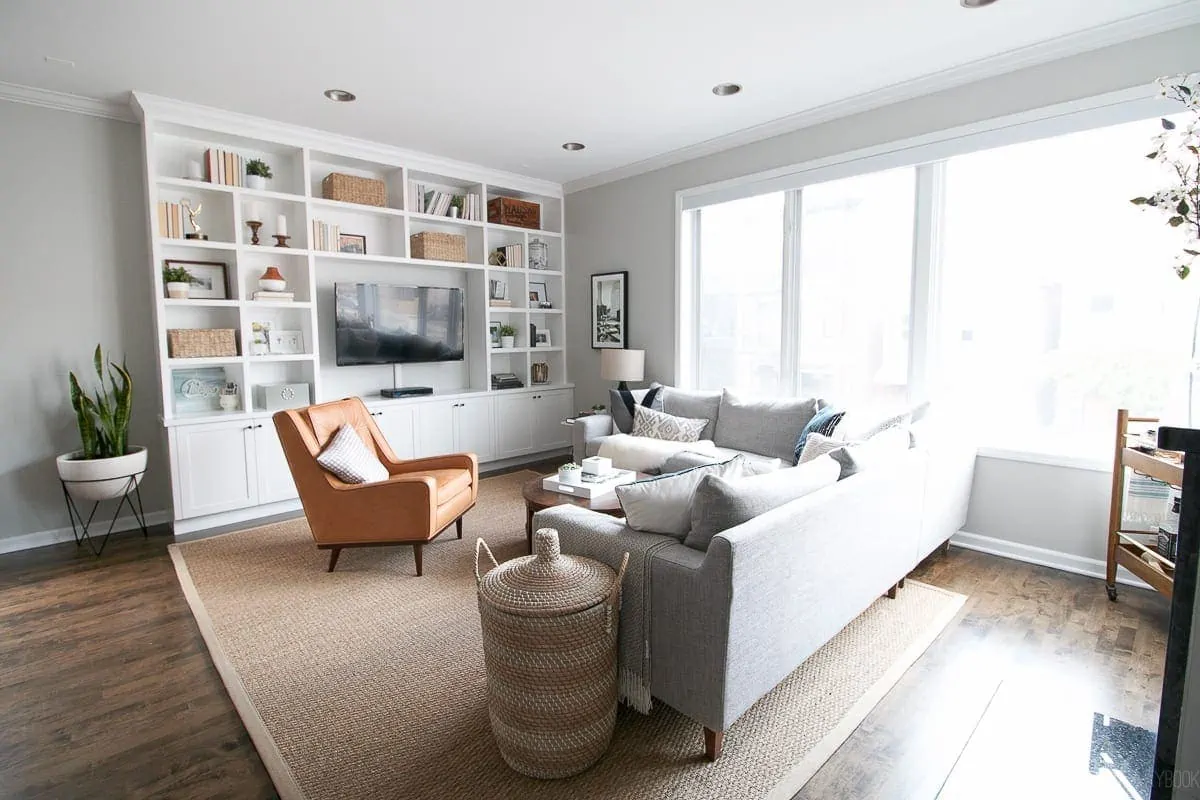
When I’m pulling a room together, the rug really sets the tone. Sometimes I want it to be a quiet, neutral backdrop (like the large seagrass rug we had in our old condo), and other times I want it to be the star of the show (like the olive and charcoal 9×12 rug in our current living room).

But before you even think about the look of a rug, you need to consider its function. Ask yourself:
- Is this a high-traffic area like a family room, entryway, or hallway?
- Will there be spills or crumbs (dining room and kitchen)?
- Do you want a rug that feels soft underfoot because kids will be playing on it?
- What kind of flooring do you have — hardwood, carpet, concrete, vinyl — and will you need a non-slip pad underneath?
Think about how you’ll actually use the rug every day before you fall in love with the color or pattern.
Rug Materials: What to Consider

Over the years, I’ve experimented with a variety of rug materials, and each has pros and cons:
- Wool rugs: My favorite long-term investment. Wool is naturally stain-resistant, cozy, and even helps with acoustics. Wool rugs can actually trap allergens and improve air quality until you vacuum them. A good wool rug can last decades and it’s the best material to consider.
- Natural fiber rugs (jute, sisal, seagrass): These rugs are durable and affordable, perfect for layering or for high-traffic areas. The only downside is that they can feel scratchy underfoot. They are not the best choice if you’re lounging or playing with kids on the floor. I write more about natural fiber rugs in this guide.

- Cotton flatweaves: These are lightweight, budget-friendly, and easy to shake out. They don’t last forever but can be a great option for kitchens or casual spaces.
- Synthetic rugs (polypropylene, nylon): Most are stain-resistant and often very affordable. They’re great for households with pets or kids, but note that many are printed and have a low pile look.
- Vintage rugs: These are hand-knotted and built to last. They’re pricier, but the beauty and durability are unmatched. I especially love vintage Turkish rugs. We’ve used them in Rory’s bedroom, our guest bathroom, and our kitchen.
If you’re unsure about a material, order a rug sample (or even a doormat in the same construction) to test color, feel, and shedding before committing.
How to Buy Rugs Online

Short answer: yes! Most of my rugs are online purchases. I love the convenience of shopping online. I can measure my space, compare dozens of styles, and wait for a sale without ever leaving the house. Plus, I’ve had great luck with returns when a rug didn’t work out.

I know it can feel intimidating to order such a big piece without seeing it in person first, but with the right strategy, buying a rug online can actually be easier, and often cheaper, than shopping in-store.
Here’s how to shop smart when you’re making your next rug purchase online:
- Read reviews carefully. Look for photos from real people in real rooms. Colors can look very different in professional product shots, so these reviews are so helpful!
- Check return policies. Only order from retailers with easy, affordable returns. If return shipping costs a fortune or isn’t offered at all, move on.
- Order a sample. Many sites sell rug swatches or doormats made from the same material. Seeing the actual color and texture in your home can save you from making a major mistake.
- Compare prices across retailers. A lot of rug brands are sold through multiple online shops — sometimes the same rug is hundreds of dollars cheaper depending on the site or sale. I always use Google Lens to compare prices when shopping online. This blog post guides you through my best tips to get a great deal!
Best Places to Buy Rugs
One of the most common questions I get is: “Where do you actually buy your rugs?” Over the years, I’ve tried just about every source out there, from big-box stores to boutique sites. Here are my go-to shops:

- RugsUSA: Wait until they have a big sale before you buy…sometimes up to 70% off!
- Lulu & Georgia: I love their unique collection of rugs. They have so many awesome colors and patterns that are right on-trend.
- Loloi: I have lots of Loloi rugs throughout my home and I buy most of them on Amazon. Their patterns and colors are fantastic, plus the prices are good.
- Wayfair: Sometimes you have to dig to find good ones, but they have such a variety and good prices.
- West Elm: You can’t go wrong with one of my favorite stores! It’s also nice that you can go into the store to view their rugs in person.
- Anthropologie: If you want something a little whimsical or patterned, Anthro’s rug selection is always fun to browse. Pricey, but they often have unique styles you won’t find elsewhere.
- Pottery Barn: A reliable source for classic rugs in neutral tones. A great option for those who want timeless pieces that work in almost any space.
- HomeGoods: This is another good spot because you get to see the rug in person before you buy. The rug in my mom’s bedroom was a steal from HomeGoods, so you really never know what you might find there.
If you find a rug you love at one retailer, Google the product name or model number. You’ll often find the exact same rug sold across multiple sites at different price points.
Vintage Rugs: Why They’re Worth It
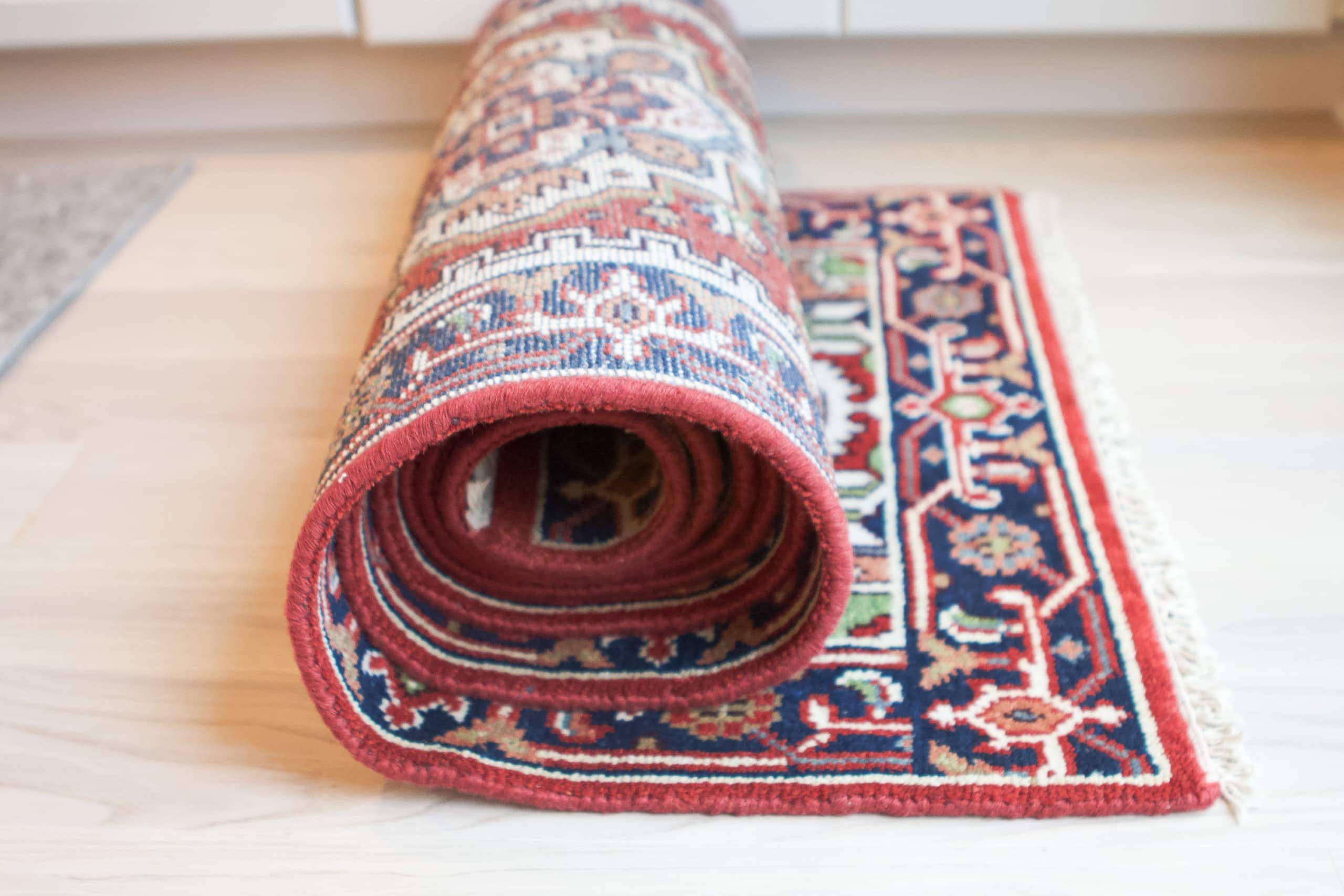
While I own plenty of vintage-inspired rugs that are new and machine-made, there’s just something extra special about a true vintage rug. A hand-knotted wool rug that’s already lived a long life was made to last — and often looks even better with age. That’s why I’ve added vintage Turkish rugs to Rory’s nursery, our guest bathroom, and even our kitchen.
One of the things I love most about vintage rugs is that they’re one-of-a-kind, and there are limitless options. No two are the same, which makes them feel personal and unique in a home. They’re also incredibly practical: most are 100% wool, which means they’re durable, naturally moisture-wicking, and ideal for high-traffic areas like kitchens and hallways.

When I was searching for a new kitchen runner, I knew I wanted a vintage piece that was 100% wool and at least 10 feet long. I ended up finding a gorgeous Serapi runner on eBay (2.5 feet by 12 feet), and the second we rolled it out, the kitchen came alive. The colorful pattern completely transformed the space, instantly making it feel more like home — lively, warm, and inviting.
My Favorite Vintage Rug Shops

Over the years, I’ve had great luck with vintage rugs on Etsy and eBay, but I also keep my eye on a handful of trusted shops:
- Canary Lane
- ESale Rugs
- Loom House
- New England Loom
- Revival Rugs
- Violet Vintage Rugs
- Vintage Rug Shop
- Zuma Imports
- eCarpet Gallery
Because these rugs are one-of-a-kind, inventory moves quickly. If you see one you love, don’t wait — it could be gone tomorrow! I recommend checking these sites regularly and using search terms like vintage rug, antique rug, Turkish rug, Persian rug, or Oushak rug to narrow things down. And don’t be afraid to shop internationally — many of the best rugs come directly from Turkey, Iran, or India.
Start small with a vintage runner in a kitchen, hallway, or bathroom. They’re usually more affordable than large 8×10 or 9×12 rugs, but they give you a taste of the beauty and durability of vintage.
Outdoor Rugs

Outdoor rugs can instantly turn a patio or deck into an inviting “room.” They anchor furniture, add color, and make the space feel more finished.
Since Chicago’s weather is rough, I don’t splurge here! Most outdoor rugs last me a season or two, and that’s a-okay. I stick to affordable options (Target, RugsUSA, Amazon, Lowe’s) and clean them with a quick power wash when they get dirty.
This is the chance to go bold with pattern or color outside! It’s a low-stakes way to have fun with your decor.
Rug Size Guide: Finding the Right Rug Size
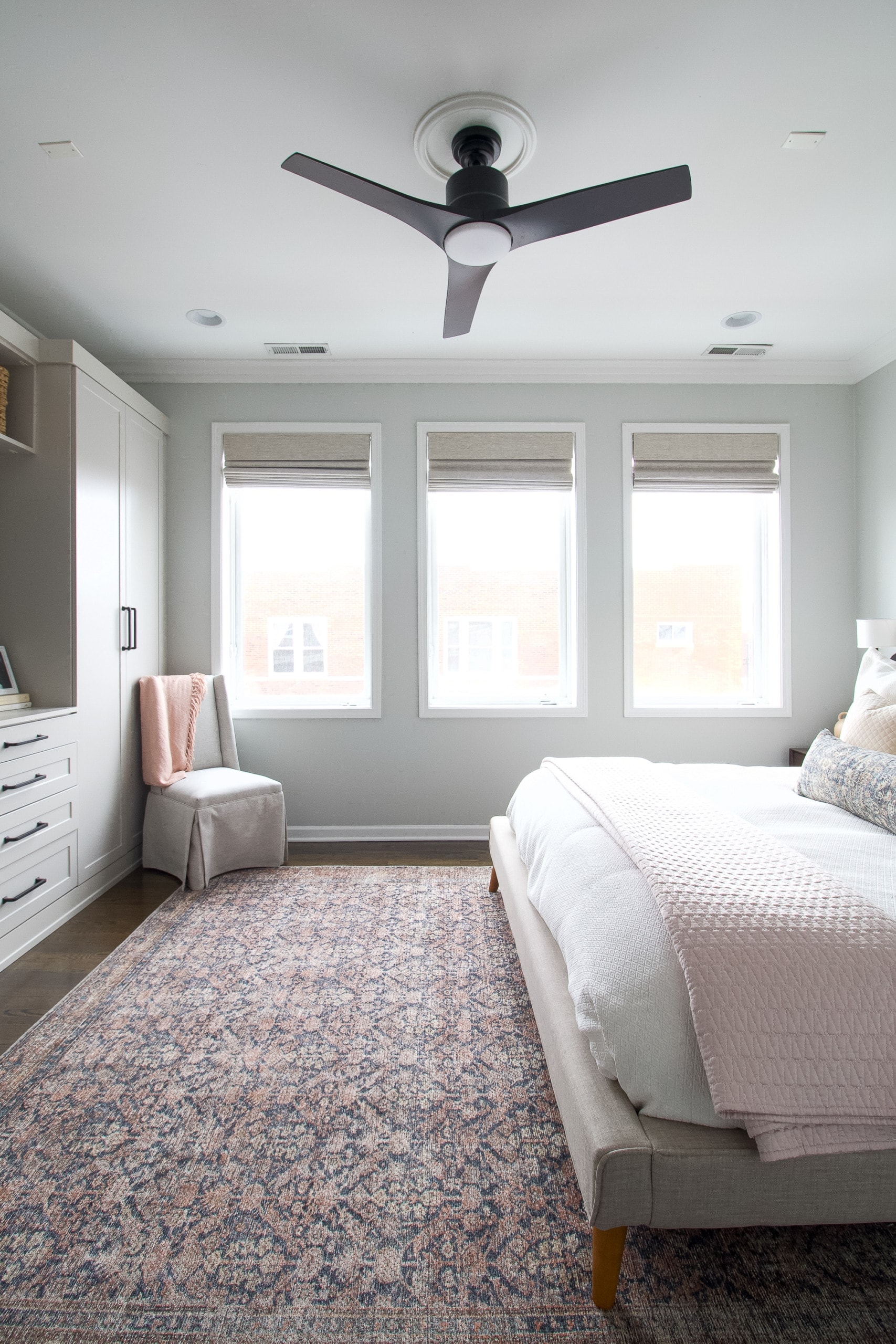
If there’s one mistake I see again and again, it’s choosing a smaller rug than the room really needs. A rug is one of the first things people notice in a space, and the wrong size can throw off the entire look of your decor.
Here are a few general rules of thumb to help you choose the right rug size for every room. If you want an even deeper dive, check out my full rug size guide here.
- Living Room: At minimum, the front legs of your furniture should sit on the rug to define the seating area. In larger, open layouts, go for a larger rug so all furniture legs are on top. Standard sizes here are 8×10 or 9×12 — a 5×7 is almost always too small!
- Dining Room: The rug should extend at least 24″ beyond the dining table on all sides so the chair legs don’t slip off when pulled out. If you’re unsure, tape off the size of the rug on your floor first.
- Bedroom: A perfect area rug frames the bed with 18–24″ showing on each side. For queens, 8×10 usually works; for kings, 9×12 is the best rug size.
- Hallways/Kitchens: Runners are an economical way to bring warmth and durability into high-traffic areas. Look for natural fibers like sisal rugs in spots that get a lot of wear.
When in doubt, go bigger. A large rug helps anchor the room and creates better visual appeal than one that’s too small and floating in the middle of your space.
Quick Rug FAQ
I asked you to send in your biggest rug questions, and here are the ones I hear most often, along with my honest answers.
Can I layer rugs (even over carpet)?

Yes! Absolutely. If you don’t love your carpet, the easiest fix is to layer a rug you love on top. Plus, I think it’s a great way to create zones in a large space, while adding color and life. That’s what we did in the living space in our basement. I like to use this carpet tape to keep it in place.
Do I need a rug pad?
Yes, especially on hardwood or concrete floors. Rug pads prevent slipping, add cushioning, and protect your floors from scratches. The good news is rug pads come in all shapes and sizes and are a fraction of the cost of the actual rug. Even if your decorative rug is an odd size or you can’t seem to find the perfect rug pad, you can always cut down a rug pad to fit your rug’s dimensions.
I use a felt and rubber rug pad under almost every rug in our house. And here’s my best tip…use these electric scissors to cut the rug pad. Trust me!
How thick should a rug pad be?
For thinner rugs, go at least 1/4″. If your rug is plush, consider using something slimmer. Just be sure to consider door clearance, as you don’t want your door to catch on the rug.
How do you clean rugs?
For everyday care, I vacuum regularly and spot clean with carpet spray for spills. I also love whipping out my Little Green clean machine when stains get really tough!
For deeper cleaning, I have our main rugs professionally steam-cleaned once a year. It’s a good idea for wool and high-quality rugs and isn’t that expensive.
Can I donate my old rug?
If it’s in good condition but just not your style, most thrift stores will happily accept it. If it’s badly stained or worn out, look into recycling options instead. This website can help!
Should you put a rug under a dining table?
You can, but think about your lifestyle first. With two little kids, it wouldn’t work for us right now. (There are so many crumbs and spills!) If you do, choose a low-pile or flatweave rug so chairs slide easily and food doesn’t get trapped.
How do you do multiple rugs in the same room?
For rugs, there are usually geometric patterns, organic patterns, and no pattern – like a natural fiber rug. I’d pick from two of the categories if you’re doing two rugs in the same room. For example, this jute rug and this rug with a more organic shape. Also, consider mixing up the textures and pile height.
How do you get the edges of the rug to lie flat?
Place heavy objects on the corners for a few days, or use rug tape if the edges curl. Rolling the rug the opposite way also helps reset it.
How long should a rug last?
A high-quality wool rug can last decades, even generations, if you care for it. Many vintage Turkish or Persian rugs are already 50+ years old and still look amazing. Lower-cost synthetics won’t last as long, but they can be a smart buy for high-traffic or messy areas.
What’s your favorite kid-friendly rug?
Hands down, our living room rug. It hides EVERYTHING — spills, stains, kid messes — and still looks great. It’s soft, low-pile, and easy to spot clean. A lifesaver for families!
Is Ruggable worth it? I don’t have any Ruggable rugs, but my mom has one as her kitchen runner and loves it. She can toss it in the washing machine if it ever gets dirty and it comes with its own rug pad.
Do you prefer carpet or rug for a bedroom? I prefer hardwood with a rug pad and rug.
Can a rug help distract from other busy elements in a space? Yes! A reader had a bold wallpaper in her space that she couldn’t remove. I had her go with a neutral rug underfoot, and it helped soften the entire look. Sometimes an easy home update (like a new rug) transforms an entire room.
Shop My Rugs

- Living Room Rug (9×12 Olive/Charcoal)
- Kitchen Runner (2.5×12)
- Basement Rug (9×12 Navy/Multi)
- Main Bedroom Rug (9×12 Natural/Sand)
- Ellis’ Room (8×10 Moss/Salmon)
- Rory’s Room
- Office Rug (5×7.5 Red/Navy)
- Laundry Room Rug (Runner Brick/Blue)
- Back Doormat (3.5×5.5 Pink/Green)
And here’s my go-to rug pad for all of them!
Go Forth & Buy a Rug with Confidence!

Wow, that was a lot about buying a rug! I hope I helped make the rug buying process a bit less scary. I know it can be overwhelming, but now you’ve got the tools you need to find the perfect rug for your home!
Casey